


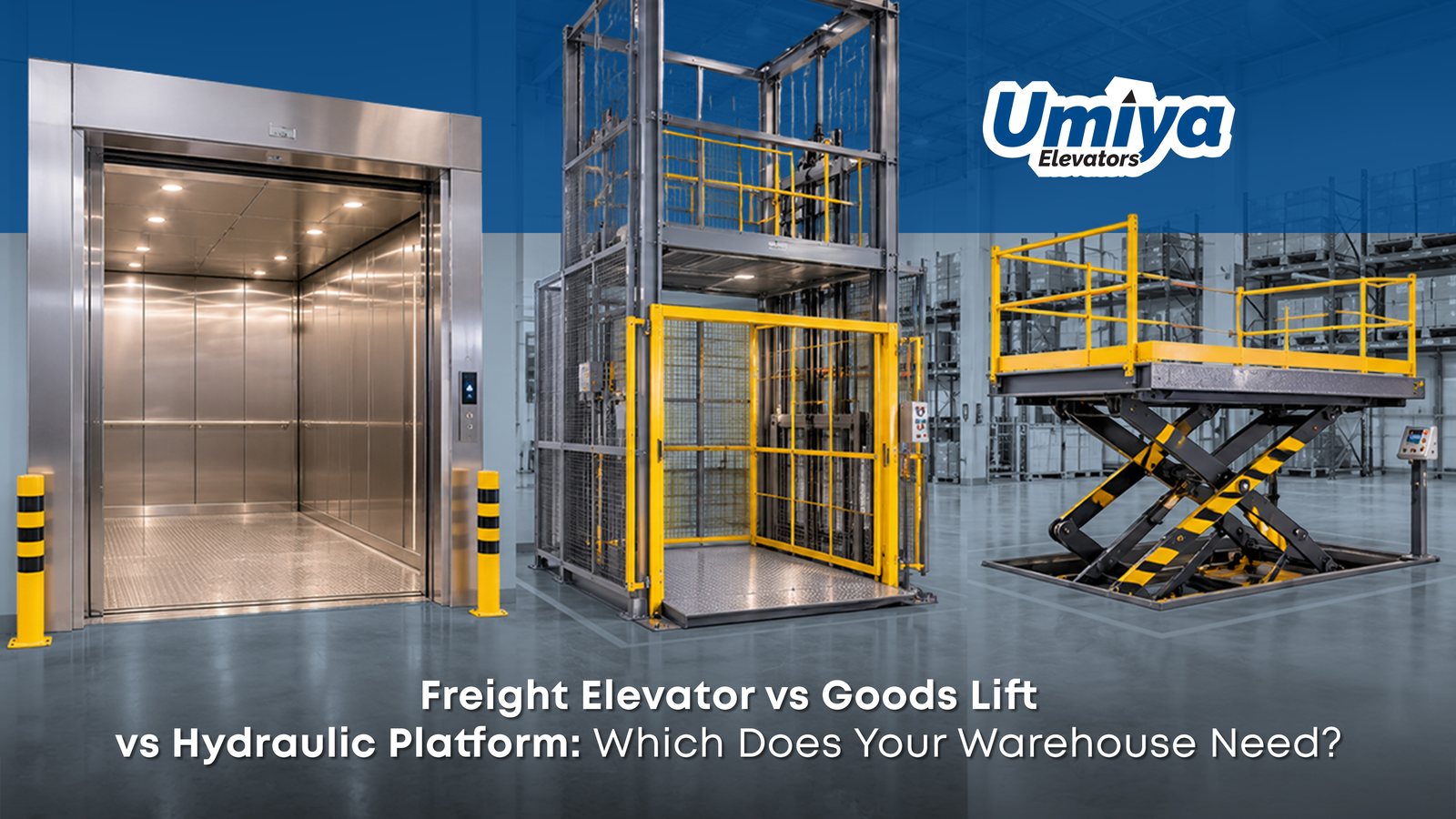
Moving heavy materials between warehouse floors requires equipment that matches the weight, size, and frequency of each load. A system suitable for transporting cartons may not handle loaded pallets or industrial machinery efficiently.
Freight elevators, goods lifts, and hydraulic lifting platforms serve different material-handling needs, although their functions sometimes overlap. Understanding these differences helps warehouse operators select appropriate equipment, improve workflow, and avoid unnecessary installation expenses.
When comparing freight elevator suppliers, businesses should evaluate more than lifting capacity. Loading methods, travel height, operating frequency, and safety requirements are equally important.
1. Understanding the Three Warehouse Lifting Systems
Freight Elevators
A freight elevator is designed to transport heavy or bulky materials between designated floors. These systems typically feature reinforced cabins, durable flooring, wide doors, and controls suited to frequent industrial use.
Freight elevators are commonly used in distribution centres, manufacturing facilities, and multi-storey warehouses handling palletised goods.
Depending on the equipment classification and applicable regulations, certain freight elevators may permit authorised personnel to accompany goods. This must be confirmed in the approved specifications.
Goods Lifts
A goods lift transports stock, cartons, tools, and other materials between building levels.
The term is often used interchangeably with freight elevator. However, suppliers may use it to describe smaller or goods-only systems.
Some goods lifts strictly prohibit passengers, making it essential to verify their permitted operating conditions.
Businesses can explore goods and industrial elevators to understand configurations designed for commercial and industrial material movement.
Hydraulic Lifting Platforms
A hydraulic lifting platform uses hydraulic pressure to raise or lower a load.
These systems are often suitable for shorter vertical distances, such as moving materials between a ground floor and mezzanine.
A platform may have an open or enclosed arrangement, depending on its design. It should not be treated as a passenger elevator unless specifically engineered and approved for that purpose.
2. Freight Elevator vs Goods Lift: What’s the Difference?
The distinction between a freight elevator and goods lift is not always based on a fixed capacity or technology.
In everyday commercial terminology, both describe equipment intended for moving goods vertically.
However, their practical differences may include:
Load capacity: Heavy-duty freight elevators are often configured for larger industrial loads, while some goods lifts are intended for smaller stock movements.
Cabin construction: Freight elevators may require reinforced flooring and larger cabins to accommodate pallets or handling equipment.
Operating frequency: Busy warehouses may need systems designed for repeated trips throughout multiple shifts.
Personnel access: Some systems permit authorised riders, while goods-only equipment does not.
The equipment’s approved design and safety classification matter more than its marketing name.
For further reading, explore how industrial goods lifts improve workplace safety and productivity.
3. When Should a Warehouse Choose a Hydraulic Platform?
Hydraulic platforms can be practical when materials need to travel between nearby levels and a full enclosed elevator is not necessary.
Common applications include:
Moving pallets to mezzanine storage areas
Transferring cartons between two levels
Raising industrial components to work platforms
Handling materials near loading and unloading zones
Hydraulic systems may offer installation flexibility, particularly where vertical travel is limited.
However, operators must consider hydraulic oil maintenance, lifting speed, platform protection, and the structural requirements of the installation.
A hydraulic platform is not automatically cheaper or safer than a goods elevator. The complete installation and operating requirements determine its suitability.
4. How to Calculate the Required Load Capacity
Before contacting freight elevator suppliers, determine the maximum weight the equipment must carry.
Start with the heaviest expected shipment and include all accompanying equipment.
For example, if a pallet carries 900 kg of goods and the pallet truck weighs 150 kg, the combined load is 1,050 kg.
The selected system must be rated for the complete load, with an appropriate engineering allowance.
Also evaluate:
Maximum pallet dimensions
Weight distribution across the platform
Point loads from wheels
Loading and unloading equipment
Expected future increases in material volume
Forklifts require particular attention because concentrated wheel loads and loading impact can exceed what a platform is designed to withstand.
Never assume that a lift can carry a forklift simply because its total rated capacity appears sufficient.
5. Compare Travel Height and Daily Operating Frequency
Travel distance significantly influences equipment selection.
A warehouse moving goods between two nearby levels may find a hydraulic solution practical.
A multi-storey distribution facility requiring frequent trips may benefit from a properly specified traction-driven freight elevator.
Operating frequency is equally important.
A facility handling occasional stock transfers has different requirements from one moving loaded pallets continuously throughout the working day.
Suppliers should assess the number of floors, trips per hour, average load, peak demand, and working shifts before recommending a drive system.
6. Safety Features That Matter in Warehouse Lifts
Industrial lifting equipment must provide appropriate protection for workers, materials, and nearby operations.
Important safety provisions may include:
Overload detection and rated-load identification
Interlocked landing gates or doors
Emergency stop controls
Suitable braking and anti-fall protection
Accurate floor-level alignment
Controlled movement during loading
Electrical and motor protection
Safety requirements depend on the equipment’s classification and applicable standards.
India’s IS 17900 series addresses safety requirements for relevant passenger and goods elevators. Other types of lifting platforms may fall under different equipment standards and statutory provisions.
The supplier should identify the applicable requirements rather than assuming every lifting system follows the same regulations.
7. Installation Requirements and Warehouse Layout
The building’s existing structure can affect which lifting system is feasible.
Before finalising equipment, examine available shaft space, floor load-bearing capacity, pit requirements, overhead clearance, and electrical supply.
Loading routes also matter. A correctly sized elevator becomes inefficient if pallets cannot turn through surrounding corridors or pass through its entrance.
For new warehouse projects, lift planning should begin before structural construction is completed.
For existing facilities, professional elevator installation services can help assess site constraints and installation feasibility.
8. Compare Maintenance and Long-Term Costs
Initial equipment price is only one part of warehouse lift ownership.
Freight elevators may require maintenance of motors, brakes, door mechanisms, controls, and other mechanical components.
Hydraulic systems additionally require attention to hydraulic fluid, seals, hoses, cylinders, and related components.
Maintenance frequency depends on equipment design, operating conditions, and usage intensity.
Warehouse owners should also check spare parts availability and service response arrangements.
The article on who is qualified to service an industrial goods lift explains important considerations when evaluating maintenance providers.
9. Which Lifting System Should Your Warehouse Choose?
The right choice depends on the actual material-handling requirement.
Choose a freight elevator when your facility needs to move heavy or bulky goods between several floors, particularly with frequent operation.
Choose a goods lift when the main requirement is transporting stock, cartons, components, or pallets using an appropriately sized goods-handling system.
Choose a hydraulic platform when materials need to move over a relatively short vertical distance and the proposed platform arrangement suits the site’s safety and loading requirements.
Before purchasing, request detailed technical drawings, capacity specifications, safety provisions, installation requirements, and maintenance terms.
Conclusion
Choosing between a freight elevator, goods lift, and hydraulic platform requires careful consideration of load weight, dimensions, travel distance, operating frequency, and warehouse layout.
The most suitable solution is not necessarily the largest or most expensive. It is the system that can safely and consistently handle the facility’s actual workload.
For warehouses and industrial facilities in Ahmedabad and Gujarat, Umiya Elevators provides goods and industrial elevator solutions, along with installation and maintenance services, to support different material-handling requirements.