


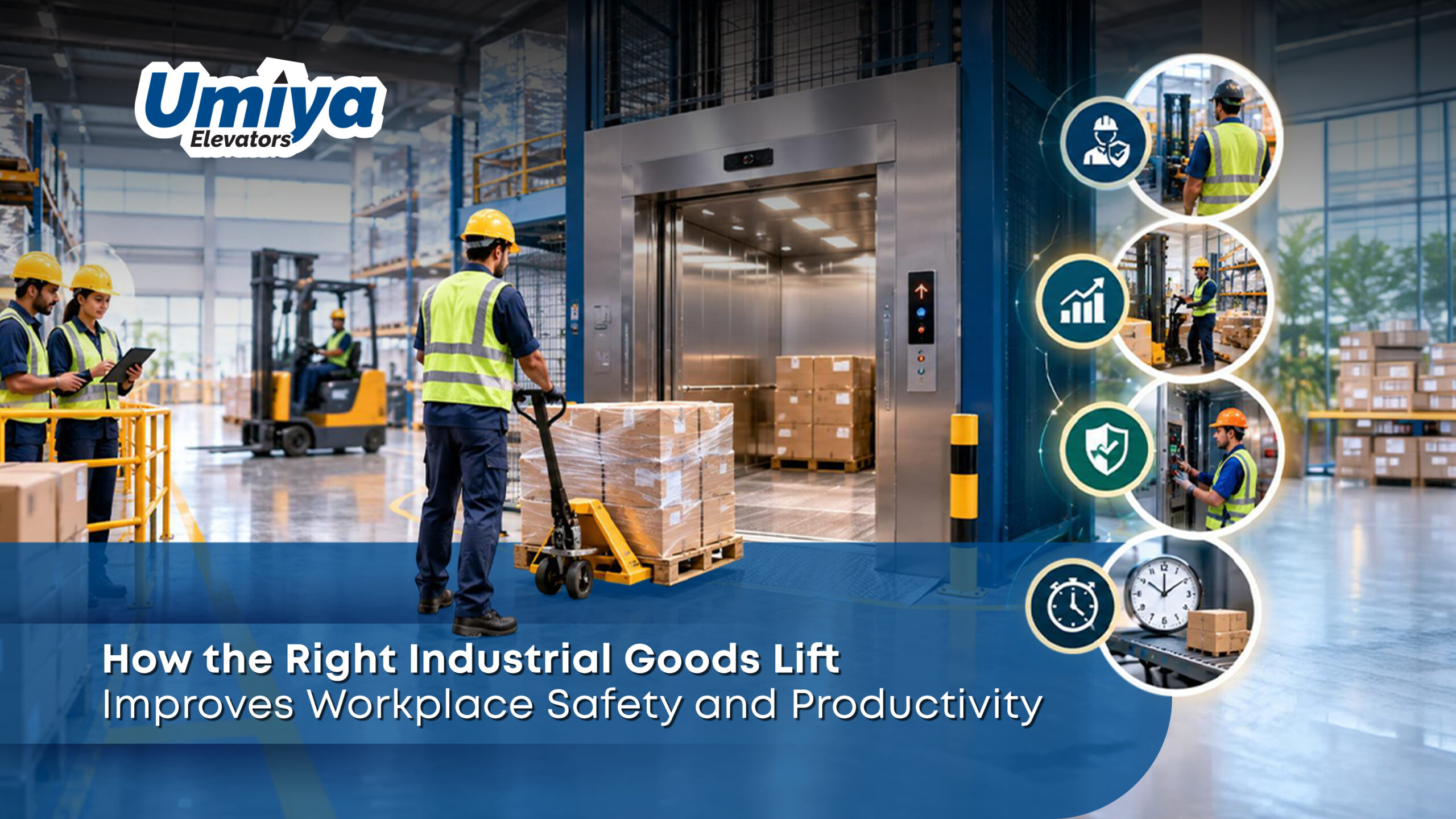
The right industrial goods lift for workplace safety can reduce manual carrying, separate heavy material movement from normal foot traffic, and make factory workflows more predictable. The benefit is not just lifting capacity. Proper sizing, loading controls, maintenance, and trained use help move materials safely while supporting steadier production.
Table of Contents
- How can a goods lift improve safety on the factory floor?
- Where does productivity improve when material movement is planned properly?
- What should factories check before selecting and operating a goods lift?
- Conclusion
- FAQs
Moving material between floors looks simple until pallets, components, tools, finished goods, and people all need the same route. Carrying heavy items manually can slow work and expose employees to awkward lifting, while improvised movement through passenger areas can create congestion.
A specified goods lift gives materials a dedicated vertical route with a defined rated load, door system, controls, and operating procedure. The aim is not to make people work faster at any cost. It is to remove unnecessary handling steps so movement becomes safer, more consistent, and easier to plan across a busy working shift.
1. How can an industrial goods lift improve safety on the factory floor?
The ILO identifies lifting, lowering, pushing, pulling, and carrying as manual-handling activities that can cause injury when poorly managed. It recommends reducing unnecessary handling and using suitable lifting aids.
That is where reduced manual lifting becomes practical. Instead of carrying cartons, tools, or components upstairs, workers can send the load vertically through a dedicated route.
A safe material handling lift must match the job. Schindler describes freight elevators for warehouses and industrial plants with capacity selected around the application.
Load handling capacity matters because overloading changes risk immediately. KONE advises users not to exceed elevator capacity when moving heavy or large items.
Safety interlocks add another layer. Landing and car doors should form part of the safety system so equipment cannot operate with access points unsecured.
2. Where does productivity improve when material movement is planned properly?
Productivity gains usually come from removing waiting, carrying, and repeated handling rather than simply increasing lift speed.
Imagine components arriving downstairs, moving to staging, then being transferred again to production. A correctly located lift can shorten that chain and support faster material movement with fewer handoffs.
That can improve workflow efficiency, especially where production depends on regular movement between stores, assembly, packing, and dispatch.
TK Elevator’s India guidance describes freight systems for plant operations and different loading classes, including palletized goods, vehicles, and concentrated loads. Lift design should follow material flow, not force every factory into one standard car.
A workplace productivity goods lift should therefore be evaluated around cycle demand, loading time, travel distance, door size, and where the material needs to arrive.
The goal is steadier factory throughput, not headline speed.
3. What should factories check before selecting and operating a goods lift?
Start with the actual load. Record the heaviest item, pallet dimensions, trolley or vehicle weight, trip frequency, destination floors, and loading method.
Then ask:
- Is rated capacity suitable for the heaviest normal load?
- Are door width and cabin dimensions suitable for pallets or trolleys?
- Does the floor structure suit concentrated loads?
- How will loading areas be kept clear?
- What safety devices and access controls are included?
- Who is allowed to operate the lift?
- What maintenance schedule matches the duty cycle?
BIS lists IS 17900 Part 1:2022 for safety, Part 2:2022 for design and component tests, Part 6:2022 for maintenance, and Part 5:2026 for inspection. Confirm the requirements applying to the proposed installation.
3.1 Why does operator behaviour matter after installation?
Operator training should cover rated capacity, load positioning, door operation, fault reporting, emergency procedures, and prohibited use.
That training supports injury prevention because employees understand where the lift fits into the handling process instead of improvising when production gets busy.
3.2 How does maintenance affect safety and output?
Planned servicing helps identify wear, alignment issues, door faults, sensor problems, and other conditions before they cause a longer shutdown.
Reduced downtime matters because a lift may connect stores, production, and dispatch. If that route disappears unexpectedly, teams may need slower temporary handling methods.
The Umiya Elevators homepage explains the company’s wider elevator solutions and support. Umiya Elevators Its elevator installation process covers assessment, specification, installation, testing, and handover. Elevator installation process
3.3 What should management review beyond the purchase price?
Look at the complete workflow. The cheapest industrial goods lift may be poor value if capacity is wrong, loading takes too long, or service support cannot match factory hours.
Compliance benefits also matter. Documented installation, inspection, maintenance, and operating procedures give management a clearer operating record.
4. Conclusion
The right industrial goods lift for workplace safety should solve a real material-flow problem. It can reduce unnecessary carrying, give heavy loads a controlled vertical route, and help production teams move components between levels with fewer interruptions.
Before choosing a system, map the load, route, frequency, loading method, and factory conditions. Then compare capacity, safety features, service support, and maintenance requirements alongside price. A good lift does not replace safe working practices; it supports them. When an industrial goods lift for workplace safety matches the workflow and people know how to use it, safer handling and stronger productivity can improve together.
FAQs
1. Can a goods lift completely eliminate manual lifting in a factory?
Usually not. A lift removes the vertical carrying stage, but materials may still need to be placed on pallets, trolleys, or workstations. The best result comes from combining the lift with sensible storage heights, suitable handling aids, clear routes, and trained procedures so workers perform fewer difficult lifts.
2. How do I choose the right capacity for a factory goods lift?
Start with the heaviest normal load, including pallets, trolleys, containers, or vehicles entering the car. Then review dimensions, load concentration, trip frequency, and future production needs. Do not select capacity from an average; the specification should safely accommodate the actual loading method.
3. Does a workplace productivity goods lift automatically make a factory faster?
No. The lift needs to sit in the right location and fit the production route. If workers still make unnecessary transfers before or after each trip, the bottleneck simply moves. Map the complete material journey first, then judge whether the proposed lift removes waiting, carrying, or repeated handling.
4. What safety features should factories discuss before buying a goods lift?
Ask about door interlocks, overload protection, emergency controls, landing access, stopping accuracy, alarms, and the devices required for the chosen system. Also discuss how loads will be positioned and who may operate the equipment. Technical safeguards work best when supported by clear site procedures.
5. How does an industrial goods lift for workplace safety support long-term productivity?
It creates a repeatable route for moving heavy or frequent loads between floors, reducing dependence on slower manual methods. When the lift is sized, maintained, and used, production teams can plan material movement more consistently. That supports reliable workflow without treating speed as more important than safe operation.