


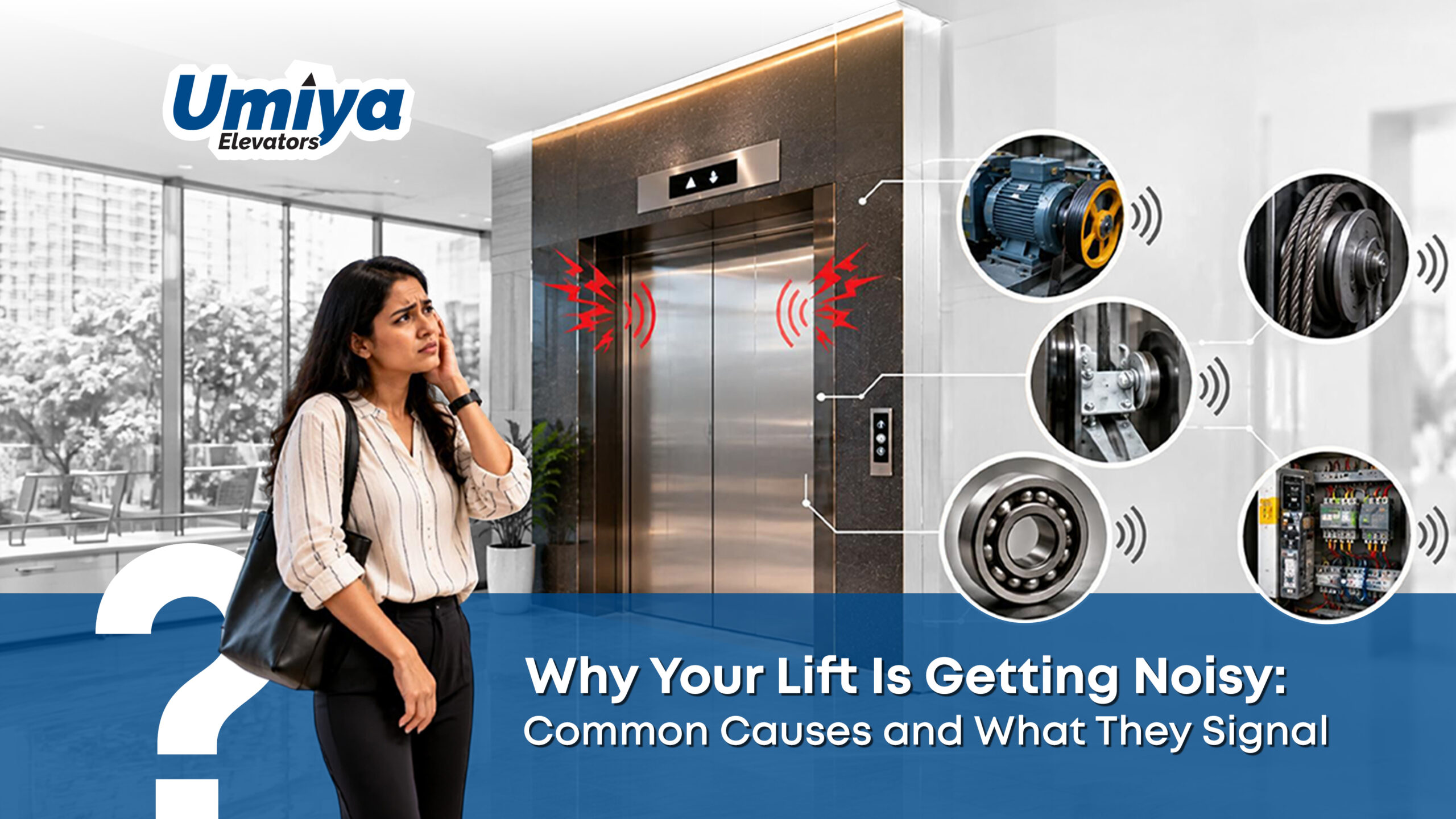
A lift should not feel rough, loud, or uncomfortable during daily use. Small sounds may be normal during movement, but repeated grinding, squeaking, rattling, knocking, or vibration should not be ignored.
Noise is often an early warning sign. It may point to door problems, guide shoe wear, rope issues, brake concerns, loose components, or poor maintenance. For apartments, offices, showrooms, hospitals, hotels, and commercial buildings, timely elevator maintenance services can help identify the issue before it becomes a breakdown or safety concern.
Why should lift noise not be ignored?
Many building owners treat lift noise as a small inconvenience. But unusual noise can indicate that one or more components are under stress.
Ignoring noise may lead to:
- Poor ride comfort
- Frequent breakdowns
- Door operation issues
- Increased wear on parts
- User complaints
- Higher repair needs later
- Possible safety concerns
A noisy lift should be checked by trained professionals instead of being used until the problem becomes serious.
What types of lift noise should owners notice?
Different sounds can point to different issues.
Common lift noises include:
- Grinding sound
- Squeaking sound
- Rattling sound
- Knocking sound
- Humming sound
- Jerky movement noise
- Door banging sound
- Vibration during travel
The exact cause should always be checked on-site, but the sound pattern can help maintenance teams understand where to begin inspection.
Why does the lift door make noise?
Lift doors are used more frequently than many other parts. In busy buildings, door systems open and close hundreds of times in a short period.
Door noise may happen because of:
- Misalignment
- Dust buildup
- Worn door rollers
- Door operator issues
- Loose panels
- Rough closing
- Weak sensor response
If the door makes a banging, scraping, or dragging sound, it should be checked quickly. Door issues are one of the most common reasons for lift complaints.
Professional elevator maintenance services usually inspect door tracks, rollers, sensors, locks, and operator movement during service.
What does squeaking during lift movement mean?
Squeaking can be linked to friction or lack of proper servicing. It may come from guide shoes, rollers, moving joints, or mechanical contact points.
Possible causes include:
- Dry moving parts
- Worn guide shoes
- Poor lubrication where required
- Dust in mechanical areas
- Misalignment
Squeaking should not be fixed casually by adding oil or grease without expert advice. Wrong lubrication can create more problems. A trained technician should identify the source first.
Why does the lift vibrate while moving?
Vibration during travel can make users uncomfortable and may indicate alignment or component wear.
Common reasons include:
- Worn guide shoes
- Guide rail alignment issues
- Uneven rope tension
- Motor or machine vibration
- Loose brackets
- Cabin balance issues
A little movement may be felt in some older lifts, but regular vibration or shaking should be inspected. This is especially important in buildings with elderly users, patients, or high daily traffic.
What causes grinding noise in a lift?
Grinding noise usually suggests mechanical friction or worn parts. It may come from the door system, guide components, machine parts, or brake-related areas.
Possible causes include:
- Worn rollers
- Poor alignment
- Dry contact surfaces
- Brake wear
- Machine component stress
- Foreign material in moving areas
Grinding sounds should be treated seriously because they often indicate that parts are rubbing or wearing abnormally.
Can lift ropes create noise?
Yes, rope-related issues can sometimes create noise, vibration, or uneven ride quality. In traction lifts, ropes are important for movement and must be inspected regularly.
Possible rope-related concerns include:
- Uneven tension
- Wear
- Alignment issues
- Abnormal vibration
- Poor pulley interaction
Building owners should never attempt to inspect or adjust ropes themselves. Rope condition should be checked only by qualified lift technicians.
Can brakes cause lift noise?
Yes. Brake issues can create unusual sounds during starting, stopping, or holding.
Possible signs include:
- Sharp sound during stopping
- Delayed stopping feel
- Jerky halt
- Repeated clicking or knocking
- Burning smell along with noise
Brake-related symptoms should be inspected immediately. Since brakes are critical safety components, any unusual sound around stopping or holding should not be ignored.
What does humming or buzzing sound mean?
A humming or buzzing sound may come from electrical or control components. Some electrical sound may be normal, but sudden or loud buzzing should be checked.
Possible causes include:
- Control panel issue
- Relay or contactor noise
- Motor vibration
- Loose electrical components
- Power supply fluctuation
Electrical noise should always be handled by trained professionals. Building staff should not open lift panels or attempt internal checks.
Why does the lift make noise only at certain floors?
If noise happens only near one or two floors, the issue may be linked to landing doors, guide rail alignment, floor-level components, or door locking systems.
Possible causes include:
- Landing door misalignment
- Door lock issue
- Floor-level guide problem
- Shaft obstruction
- Local bracket or rail issue
This type of noise is useful information for the maintenance team. Owners should note where the sound happens and share it during the service visit.
Does poor maintenance make lifts noisier?
Yes. Regular servicing helps reduce avoidable noise by keeping components clean, aligned, adjusted, and inspected.
Poor maintenance can lead to:
- Dry or worn parts
- Loose fittings
- Dust accumulation
- Door misalignment
- Vibration
- Brake wear
- Increased friction
Reliable elevator maintenance services help detect these issues early and prevent unnecessary wear.
When should building owners call for service?
Owners should call for professional inspection if:
- Noise appears suddenly
- Noise becomes louder over time
- Lift starts vibrating
- Doors make repeated banging sounds
- Lift movement feels jerky
- Users report discomfort
- Noise occurs while stopping
- Burning smell appears with sound
- Lift stops frequently
Do not wait for the next scheduled service if the sound feels unusual or unsafe.
What should owners tell the maintenance team?
Clear information helps technicians identify the issue faster.
Owners should note:
- Type of noise
- When it happens
- Which floor it happens near
- Whether it happens during opening or closing
- Whether vibration is also felt
- Whether the lift stops or jerks
- How long the issue has been happening
This makes the service visit more focused and practical.
How can elevator maintenance services prevent noisy lift problems?
Professional elevator maintenance services help through regular inspection and preventive care.
They can check:
- Door operator condition
- Door rollers and tracks
- Guide shoes
- Guide rails
- Rope condition
- Brake system
- Motor and machine parts
- Control panel
- Cabin movement
- Noise and vibration patterns
A good maintenance plan does not only fix breakdowns. It helps identify early warning signs before users face major inconvenience.
Conclusion
A noisy lift is not always a major failure, but it should never be ignored. Sounds like grinding, squeaking, rattling, humming, knocking, or vibration can indicate door issues, guide shoe wear, rope concerns, brake problems, loose components, or electrical faults.
For building owners in Gujarat, timely elevator maintenance services can help identify the cause, reduce breakdown risk, and keep the lift safer for daily use.
The best approach is simple. Listen to the warning signs, note when they happen, and call trained lift professionals before a small sound becomes a larger repair.