


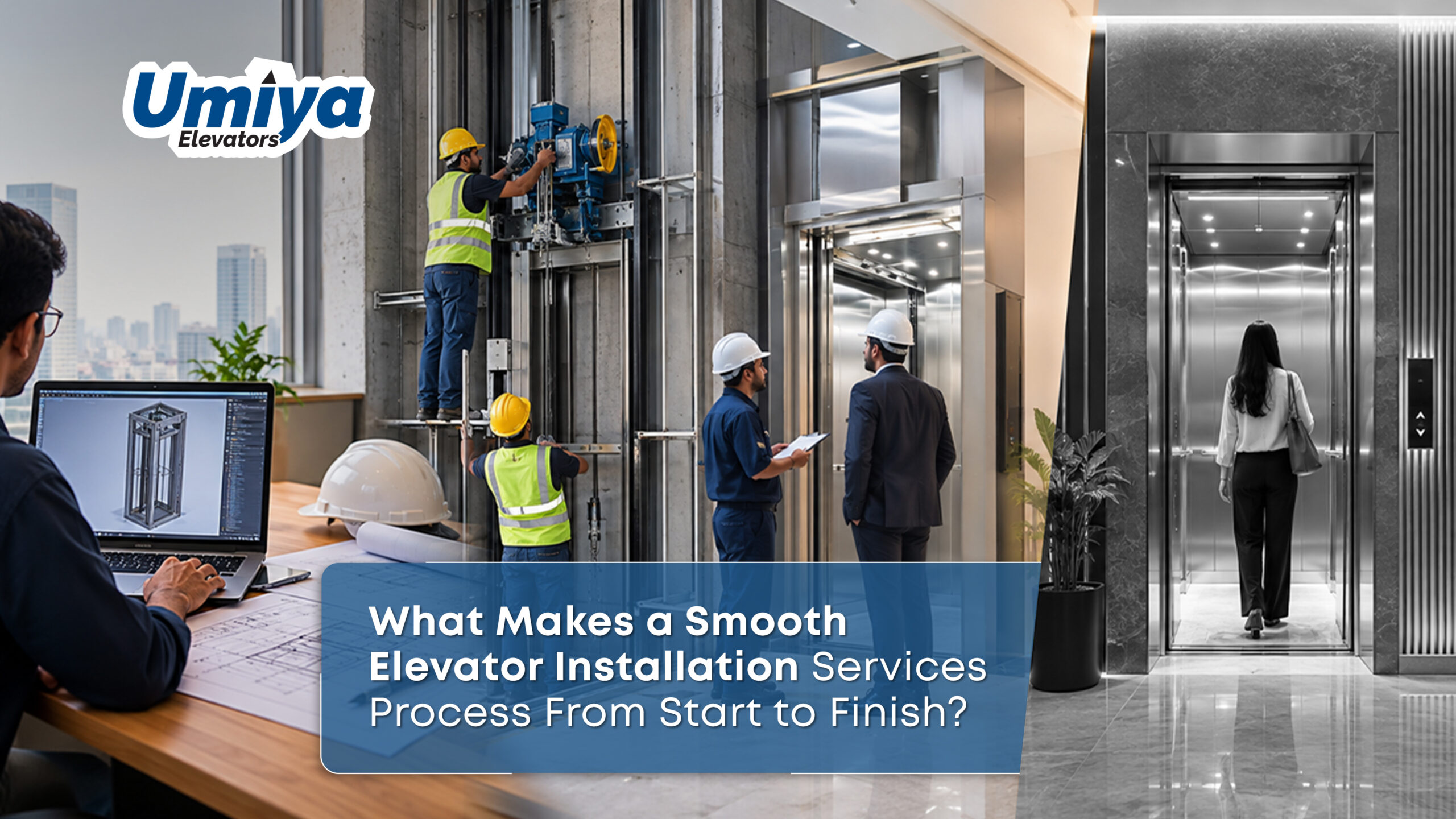
A smooth elevator installation services process depends on preparation long before technicians begin fitting rails or wiring controls. Clear drawings, site readiness, coordinated contractors, documented safety checks, and regular updates keep the project moving. The best installations feel organized because responsibilities, approvals, testing, and handover are planned rather than improvised.
Table of Contents
- What makes an elevator installation start smoothly?
- How should the installation itself be managed?
- What turns a completed installation into a good handover?
- Conclusion
- FAQs
A lift installation touches more of a building than many owners expect. The shaft, pit, power supply, landing openings, storage space, and access route need to be ready at the right time.
That is why the best elevator installation experience starts with coordination rather than equipment delivery. Before work begins, the owner, builder, electrical contractor, civil team, and lift company should know what each party must finish and when.
A practical example: if the landing opening is unfinished when door work is due, the installer may have to stop, the civil team has to return, and later testing can shift with it. Nothing is technically dramatic, but the sequence slips.
That is why site-readiness meetings are useful before mobilization. They turn drawings into a checklist and give contractors a chance to flag missing work, access constraints, delivery concerns, or dependencies before components enter the shaft.
1. What makes elevator installation services start smoothly?
The first step is a site assessment. Shaft dimensions, pit depth, overhead space, electrical requirements, structural conditions, and material access should be checked against the approved layout.
In Gujarat, the Gujarat Lifts and Escalators Act requires permission to erect a lift and requires erection by a person authorized under Section 13. An operating licence is required after erection.
That legal sequence should sit inside the clear project timeline, not appear as a last-minute paperwork task.
BIS lists the IS 17900 series for lift safety, design, planning, inspection, and maintenance. Planning should follow the applicable current standard and approved drawings.
A hassle-free lift installation also depends on coordinated civil work. Openings, dimensions, power, and waterproofing should be checked before technicians mobilize.
Before equipment arrives, confirm:
- Shaft and pit dimensions match approved drawings.
- Required electrical supply is available.
- Landing openings and structural supports are ready.
- The pit and shaft are dry and clear.
- Safe site access is available for workers and materials.
- A protected storage area is ready for components.
- Required permissions and project documents are in place.
2. How should the smooth elevator installation services process be managed?
Once the site is ready, installation follows a sequence. Rails, drive equipment, car structure, doors, controls, wiring, safety devices, and cabin finishes must come together in the correct order.
A trained installation team matters because lift work combines mechanical, electrical, structural, and safety-critical tasks. Teams also need current drawings and a clear escalation route.
Transparent communication keeps small issues from becoming schedule problems. Updates should state what is complete, what happens next, and who owns any blockage.
This is where support during install matters. The building team should know who can make technical decisions.
2.1 Why are stage-by-stage checks better than waiting until the end?
Quality checks at each stage can catch alignment, fixing, wiring, door, or dimensional problems while correction is still straightforward.
That supports safety during installation too. An active lift shaft is a construction hazard, so access control, housekeeping, safe work practices, and coordination with other trades should be managed throughout the job, not only during final testing.
2.2 How do you keep installation from disrupting the whole building?
In occupied buildings, plan delivery routes, noisy work, temporary barriers, work hours, and landing access before technicians arrive.
Minimal disruption means occupants know which areas are affected and for how long.
The same planning supports on-time delivery. Dependencies should be communicated early enough for the project team to act.
3. What turns a completed installation into a good handover?
A moving cabin is not a completed installation.
Testing should cover stopping, doors, controls, alarms, safety devices, ride behaviour, and required checks. BIS describes IS 17900 as supporting safe, intended lift operation.
For a hassle-free lift installation, commissioning should have a written checklist instead of an informal final ride.
The post-installation walkthrough should explain operation, emergency contacts, user precautions, documentation, warranty, and maintenance arrangements.
At Umiya Elevators Umiya Elevators homepage, its installation process Umiya elevator installation service moves from site survey through design, installation, testing, calibration, and handover, with service support after installation.
That sequence helps when comparing elevator installation services because owners can ask about each stage before signing.
3.1 What should you collect before the installation team leaves?
Keep approved drawings, commissioning records, warranty documents, contacts, and maintenance information together.
Ask about any unfinished observations and record who will close them.
A good handover clearly transfers responsibility from project execution to everyday operation and service.
4. Conclusion
A smooth elevator installation services process is mostly the result of good preparation. Accurate site information, coordinated civil and electrical work, an agreed schedule, trained technicians, safe work practices, stage inspections, and clear communication keep the installation moving in the right order.
Do not judge an installer only by the completion date. Ask what must be ready, how progress is reported, how changes are handled, and what testing happens before handover. Early agreement makes the project easier for everyone to manage.
FAQs
1. What should be ready before an elevator installation team arrives?
The lift company should confirm the project-specific requirements, but common items include an approved shaft, correct pit and overhead conditions, required electrical supply, safe access, landing openings, and secure component storage. Site readiness should be checked against approved drawings before equipment delivery instead of relying on visual assumptions.
2. How long does an elevator installation normally take?
There is no single reliable duration. Building type, number of stops, lift design, site readiness, civil work, equipment availability, approvals, and testing can all affect the schedule. Ask the provider for a project-specific timeline that separates manufacturing, site preparation, physical installation, inspection, and handover.
3. Who should coordinate civil work during lift installation?
The responsibility should be defined before work begins. The builder or civil contractor usually executes building work, while the lift provider supplies technical dimensions and installation requirements. Regular coordination between both sides helps prevent shaft, pit, opening, or power-related mismatches that can stop the installation team.
4. What should I expect from a good lift installation project?
Expect clear responsibilities, regular progress updates, a prepared site, qualified installers, documented testing, and a proper handover. You should know what is happening next and whom to contact when a site issue appears. Good project management makes technical work easier to follow even if you are not an elevator specialist.
5. What should be checked before accepting a smooth elevator installation services process as complete?
Confirm that agreed installation work is finished, testing and commissioning records are available, outstanding observations are documented, and the owner has received operating, warranty, and service information. The final walkthrough should also explain normal use, emergency contacts, maintenance expectations, and the next responsibilities after handover.