


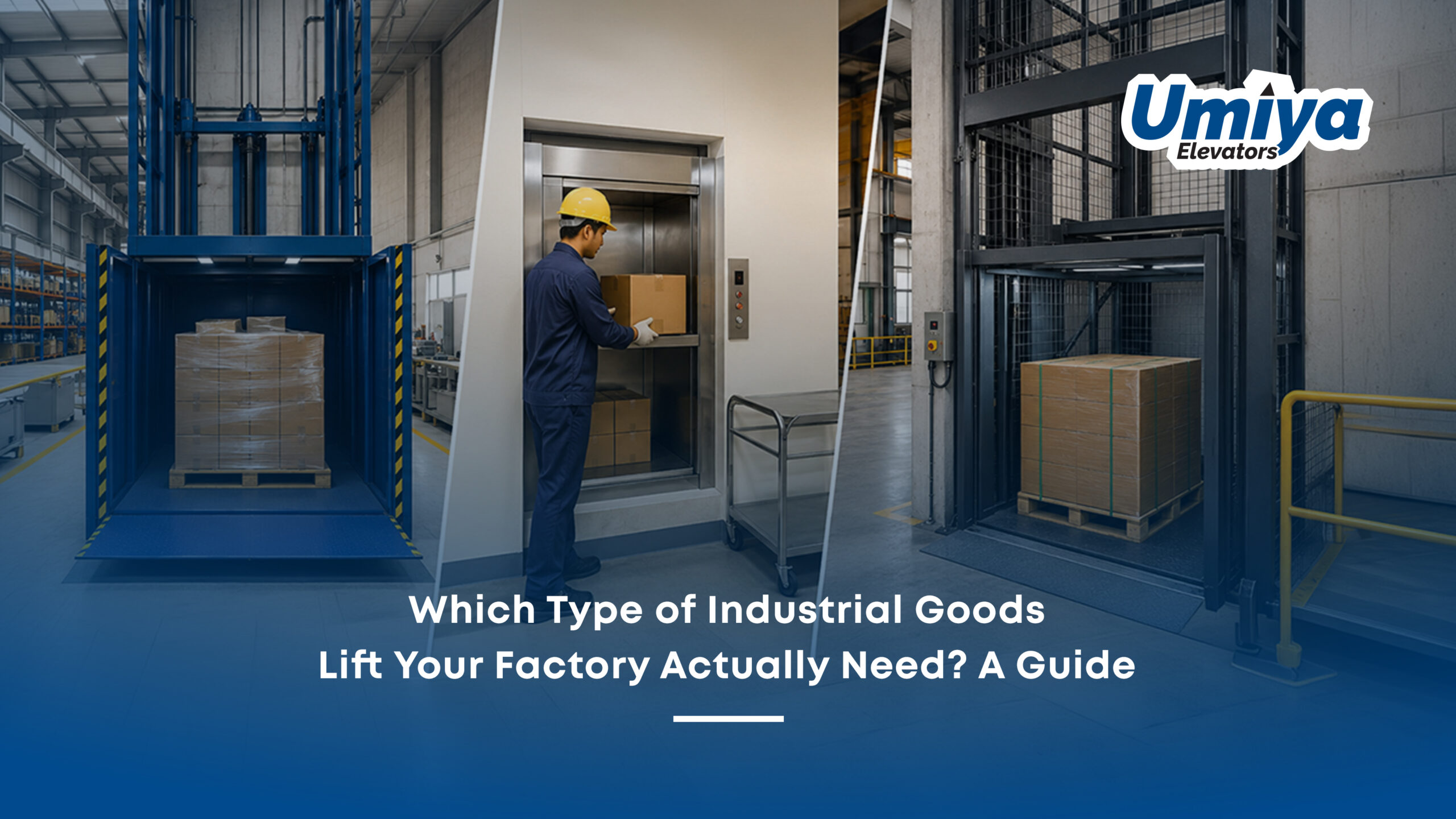
Factories, warehouses, and industrial buildings often need to move heavy materials between floors several times a day. Raw materials, finished goods, tools, machine parts, cartons, and equipment all require safe and organized movement. If this movement depends only on manual labor, it can slow down operations and increase safety risks.
An industrial goods lift helps factories move loads efficiently, but choosing the right type is important. Not every factory needs the same lift. The right choice depends on load capacity, usage frequency, available space, material type, and daily workflow.
This guide explains how businesses can select the most suitable industrial goods lift for their factory or warehouse.
What is an industrial goods lift?
An industrial goods lift is a lift system designed to move materials, goods, equipment, and heavy loads between different floors. Unlike passenger lifts, it is mainly built for load movement rather than people movement.
It is commonly used in:
- Factories
- Warehouses
- Manufacturing units
- Textile units
- Automobile workshops
- Storage facilities
- Commercial stock areas
- Logistics buildings
The main purpose of an industrial goods lift is to reduce manual handling, improve workflow, and make load movement safer.
Why does choosing the right goods lift matter?
A goods lift directly affects daily industrial operations. If the selected lift is too small, too weak, or not suited to the material being moved, it can create operational problems.
Choosing the right lift helps businesses:
- Move goods safely
- Reduce manual labor
- Improve floor-to-floor movement
- Avoid overloading issues
- Reduce product damage
- Improve operational speed
- Support long-term industrial use
For factories in Gujarat, selecting the right industrial goods lift is not just about installation. It is about improving daily efficiency.
What factors should you check before selecting an industrial goods lift?
Before choosing a lift, businesses should evaluate how it will be used every day.
Important factors include:
- Type of goods being moved
- Average and maximum load weight
- Size of materials
- Number of floors
- Frequency of usage
- Loading and unloading space
- Available shaft area
- Safety requirements
- Maintenance support
A proper site inspection helps identify which lift type fits the building structure and operational needs.
Which goods lift is suitable for light industrial movement?
For factories or commercial spaces handling lighter materials, a compact goods lift may be enough.
This type is suitable for:
- Packaged goods
- Small cartons
- Retail stock
- Light tools
- Small machine parts
These lifts are commonly used in small warehouses, stockrooms, workshops, and commercial storage areas.
If your business only needs to move lighter items several times a day, a smaller industrial goods lift can offer practical support without occupying unnecessary space.
Which lift is best for heavy-duty factory operations?
For factories that move heavy materials regularly, a heavy-duty goods lift is more suitable.
This type is useful for:
- Large raw material movement
- Machinery parts
- Heavy cartons
- Industrial equipment
- Bulk inventory
- Production materials
A heavy-duty industrial goods lift requires stronger structure, higher load capacity, and proper safety systems. It should be planned carefully based on the maximum load requirement rather than only average daily usage.
When should a factory choose a hydraulic goods lift?
Hydraulic goods lifts are often used in industrial spaces where smooth movement and load handling are important.
They are suitable for:
- Low-rise industrial buildings
- Medium to heavy load movement
- Factories with steady operational usage
- Warehouses requiring stable lifting performance
Hydraulic systems are generally preferred when speed is not the main priority, but strength and controlled movement are important.
A lift provider can suggest whether a hydraulic solution fits your building layout and load requirement.
When is a traction-based goods lift useful?
Traction-based systems may be suitable for buildings where frequent movement and better operational efficiency are required.
They can be considered for:
- Multi-floor industrial buildings
- Higher usage environments
- Warehouses with continuous movement
- Facilities requiring faster floor-to-floor operation
The selection depends on available space, usage intensity, and technical feasibility.
For high-traffic industrial spaces, proper planning helps ensure the lift performs reliably under regular load movement.
Is a platform goods lift suitable for factories?
Platform goods lifts are often used where materials need to be moved on trolleys, pallets, or wheeled equipment.
They are suitable for:
- Warehouses
- Stockrooms
- Small factories
- Commercial storage spaces
- Workshops
They help make loading and unloading easier, especially where goods are moved using carts or pallet trucks.
The platform size should be selected based on the actual material dimensions and loading method.
How is an industrial goods lift different from a dumbwaiter elevator?
A dumbwaiter elevator is a compact lift designed for small and lightweight items such as food trays, medicines, files, utensils, and linen.
An industrial goods lift is designed for heavier loads and larger materials.
A dumbwaiter elevator is suitable for:
- Restaurants
- Hotels
- Hospitals
- Cafes
- Commercial kitchens
An industrial goods lift is suitable for:
- Factories
- Warehouses
- Workshops
- Manufacturing units
- Storage facilities
Choosing between the two depends on the size and weight of the goods being transported.
Can a passenger lift be used for goods movement?
A passenger lift should not be used as a regular goods movement solution.
Passenger lifts are designed for people. They focus on comfort, ride quality, and user safety. Regular movement of heavy materials can damage interiors, strain components, and affect safety.
If your building needs both people movement and goods movement, it is better to plan separate lift systems. Many passenger lift manufacturers also provide goods lifts and service lifts for different building needs.
What safety features should an industrial goods lift have?
Safety is essential in any industrial environment.
A reliable industrial goods lift should include:
- Overload protection
- Emergency stop system
- Strong platform or cabin structure
- Secure door locking system
- Smooth movement control
- Safe loading and unloading design
- Proper electrical safety setup
These features help reduce operational risk and improve worker confidence during daily usage.
How much space does an industrial goods lift require?
Space requirements depend on the lift type, load capacity, and material size.
Businesses should plan for:
- Shaft or platform area
- Loading and unloading space
- Door opening width
- Floor access points
- Structural support
- Maintenance access
In new factories, goods lift planning should be included during building design. In existing factories, a site assessment helps decide whether internal or external installation is more practical.
Why is lift AMC important for industrial goods lifts?
An industrial goods lift usually handles frequent movement and heavy loads. Regular maintenance is necessary to keep the lift safe and reliable.
A lift AMC helps with:
- Routine inspections
- Load system checks
- Motor servicing
- Door mechanism checks
- Safety feature testing
- Preventive maintenance
- Faster support during breakdowns
For factories and warehouses, lift downtime can delay operations. A proper lift AMC helps reduce unexpected interruptions and supports long-term performance.
How do you choose the right lift supplier?
Choosing the right supplier is as important as choosing the right lift type.
Before finalizing, check whether the provider offers:
- Site inspection
- Load capacity guidance
- Industrial lift experience
- Safety-focused installation
- Customization options
- Local service support
- Lift AMC after installation
Experienced passenger lift manufacturers or lift solution providers can guide businesses across multiple requirements, including passenger lifts, industrial goods lifts, dumbwaiter elevators, and maintenance support.
Final checklist before choosing an industrial goods lift
Before selecting a lift, ask these questions:
- What is the maximum load we need to move?
- How many times will the lift be used daily?
- What type of goods will be transported?
- Is the lift for cartons, pallets, machinery, or mixed materials?
- How much space is available?
- Is internal or external installation better?
- What safety features are included?
- Will AMC support be available after installation?
- Can the lift be customized for our workflow?
A clear answer to these questions helps businesses choose a lift that works for actual factory needs.
Thus, The right industrial goods lift depends on how your factory or warehouse operates every day. Light material movement, heavy-duty load handling, trolley movement, and continuous industrial usage all require different lift planning.
For businesses in Gujarat, choosing the right system can improve safety, reduce manual labor, and support smoother daily operations. Whether your building needs an industrial goods lift, dumbwaiter elevator, passenger lift, or lift AMC support, proper assessment and expert guidance are essential.
A well-selected goods lift does more than move materials. It improves workflow, protects workers, and supports long-term operational efficiency.