


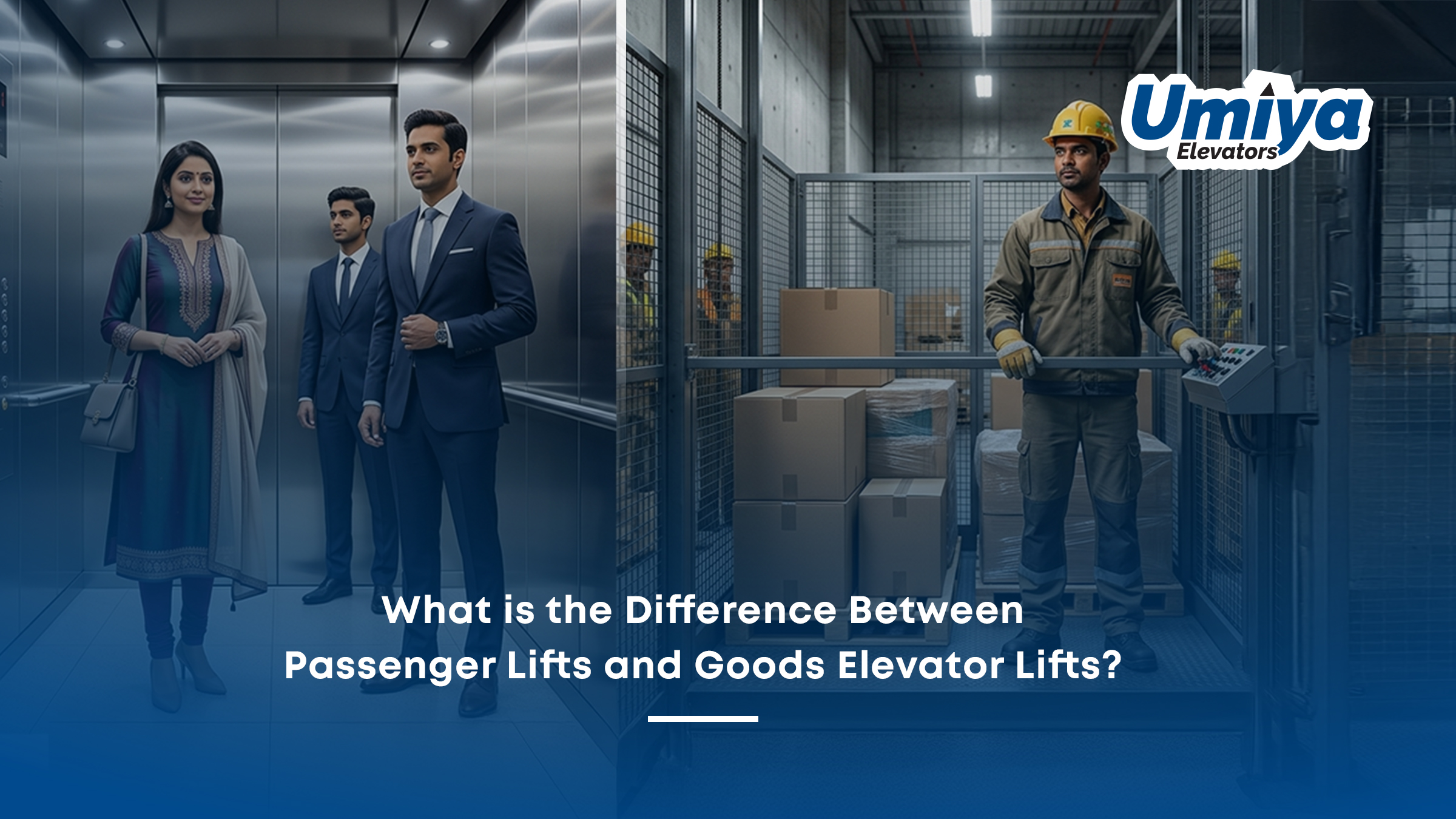
When planning elevators for a commercial or industrial space, one common question is whether to install passenger lifts or goods elevator lifts. While both serve the purpose of vertical movement, they are designed for completely different use cases.
Understanding this difference helps businesses in Gujarat choose the right system based on their operational needs.
What are Passenger lifts?
Passenger lifts are designed to carry people comfortably and safely between floors. These are commonly installed in commercial spaces where customer and employee movement is frequent.
They are typically used in:
- Office buildings
- Showrooms and retail stores
- Hospitals
- Hotels
Passenger lifts focus on smooth operation, comfort, and aesthetics.
What are Goods Elevator lifts?
Goods elevator lifts are built to transport materials, equipment, and heavy loads. These lifts prioritize strength, durability, and load capacity over comfort.
They are commonly used in:
- Warehouses
- Factories
- Industrial units
- Stockrooms in retail spaces
These lifts are designed for operational efficiency rather than passenger convenience.
What is the main difference between passenger lifts and goods lifts?
The primary difference lies in their purpose and design.
Passenger lifts:
- Designed for people
- Comfortable interiors
- Smooth and quiet operation
- Moderate load capacity
Goods elevator lifts:
- Designed for materials and heavy loads
- Strong and durable structure
- Focus on load handling
- Higher capacity
Choosing between them depends on whether the priority is people movement or material handling.
Can passenger lifts carry goods?
Passenger lifts can carry light items, but they are not meant for heavy-duty usage.
Limitations include:
- Lower load capacity
- Interior finishes that can get damaged
- Not suitable for bulky or industrial materials
For regular goods movement, using goods elevator lifts is a more practical and safe option.
Can goods elevator lifts carry passengers?
Goods elevator lifts are not designed for regular passenger use.
Reasons include:
- Lack of comfort features
- Basic interiors
- Safety design focused on materials rather than people
Some systems may allow limited operator use, but they are not a substitute for passenger lifts in commercial buildings.
Which option is better for commercial buildings?
Most commercial spaces require both systems.
Passenger lifts are used for:
- Customer movement
- Employee access
- Front-facing operations
Goods elevator lifts are used for:
- Backend operations
- Stock movement
- Material handling
In retail showrooms and malls across Gujarat, this combination ensures smooth operations without affecting customer experience.
How do you decide which lift your business needs?
The decision depends on business type and usage.
Consider:
- Nature of operations
- Volume of goods handled
- Number of people using the building
- Frequency of movement
For example:
- Offices mainly need passenger lifts
- Warehouses depend on goods elevator lifts
- Showrooms often require both
Proper planning ensures efficient workflow and avoids operational issues.
Is installation different for both types?
Yes, installation requirements differ based on design and purpose.
Passenger lifts:
- Focus on accessibility and aesthetics
- Installed in visible areas
- Designed for frequent use
Goods elevator lifts:
- Focus on strength and load capacity
- Installed in service areas
- Built for heavy-duty operations
In commercial projects in Gujarat, both are often planned during construction for better integration.
What about maintenance and durability?
Both systems require maintenance, but usage patterns differ.
- Passenger lifts need regular servicing due to continuous usage
- Goods elevator lifts require strong maintenance due to heavy load handling
Scheduled servicing ensures long-term performance for both types.
Conclusion
Passenger lifts and goods elevator lifts serve different but equally important roles in commercial and industrial environments. One focuses on people, while the other supports operations.
For businesses in Gujarat, selecting the right system or combination of both ensures smooth daily functioning, better efficiency, and improved user experience. Understanding your requirements clearly will help you invest in the most suitable elevator solution for your space.