


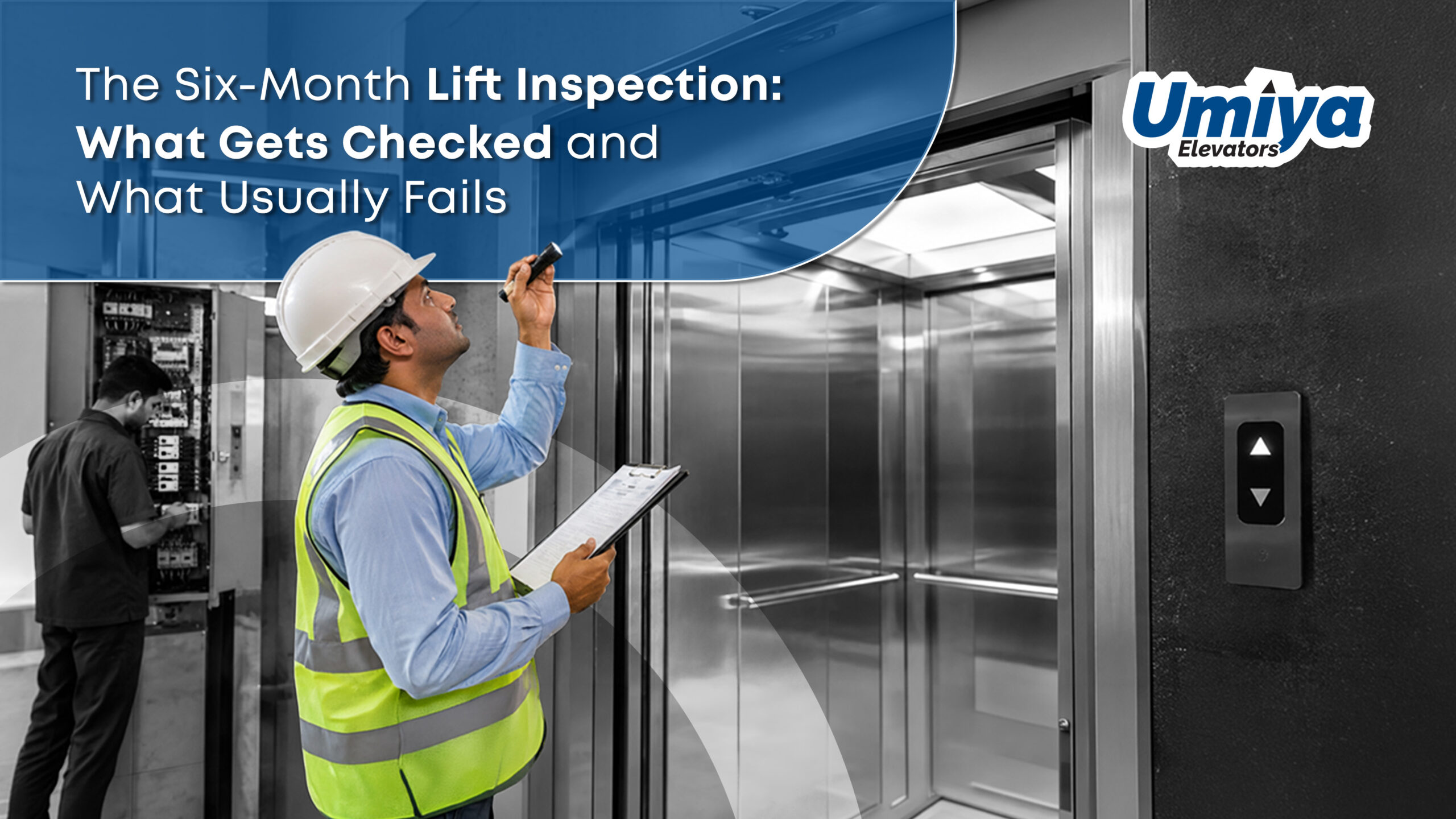
Lift safety does not depend only on installation quality. It also depends on regular inspection, testing, and maintenance after the lift starts operating. In Gujarat, building owners must understand the importance of periodic lift inspection, especially the six-month inspection required after licence approval.
For apartments, commercial buildings, hospitals, hotels, factories, and showrooms, regular checks help detect issues before they become serious about safety or breakdown problems. Professional elevator maintenance services play an important role in keeping the lift safe, reliable, and ready for daily use.
What is a six-month lift inspection?
A six-month lift inspection is a periodic safety and performance check carried out after the lift has received its operating licence. The purpose is to confirm that the lift is still functioning safely and that important safety systems are working properly.
This inspection is not the same as a quick routine service visit. It focuses on the actual safety condition of the lift, including mechanical parts, electrical systems, doors, brakes, ropes, and protection devices.
For building owners in Gujarat, this inspection should be treated as a serious compliance and safety responsibility.
Why is lift inspection important for building owners?
A lift may appear normal from the outside, but internal components can wear down over time. Small issues can develop in brakes, ropes, door locks, sensors, wiring, or control systems.
Regular inspection helps owners:
- Identify unsafe conditions early
- Reduce breakdown risk
- Improve user safety
- Maintain compliance records
- Plan repairs before failure
- Support smoother daily operation
This is why reliable elevator maintenance services are important for both residential and commercial buildings.
What gets checked during a six-month lift inspection?
A proper inspection covers different parts of the lift system. The exact checklist may vary based on lift type, usage, and authority requirements, but several key areas are commonly reviewed.
Are lift brakes checked during inspection?
Yes. Brakes are one of the most important safety components in a lift. They help control movement and hold the lift in position when required.
During inspection, the brake system may be checked for:
- Proper stopping function
- Wear in brake parts
- Unusual noise
- Delayed response
- Holding performance
- Signs of overheating or damage
Brakes usually fail or create issues when maintenance is irregular, parts are worn out, or adjustments are ignored.
Are lift ropes checked for wear and damage?
Yes. Suspension ropes or cables are checked carefully because they support lift movement. Over time, ropes may show signs of wear due to regular operation.
Inspection may include checking for:
- Broken wires
- Rust or corrosion
- Uneven tension
- Fraying
- Excessive wear
- Rope alignment issues
Rope-related issues should never be ignored. If a rope shows visible damage or abnormal wear, the lift should be assessed by qualified professionals before continued use.
What is checked in the overspeed governor?
The overspeed governor is a safety device that helps protect the lift if it moves faster than its designed speed. It is a critical part of lift safety.
Inspection may include checking:
- Governor rope condition
- Proper movement
- Safety tripping function
- Mechanical condition
- Calibration-related records where applicable
A faulty overspeed governor can be a serious safety concern. This is one reason building owners should not delay inspections or depend only on informal servicing.
Why are door interlocks important?
Door interlocks ensure that the lift does not move unless the doors are properly closed and locked. This is one of the most important checks in any lift inspection.
Door interlock checks may include:
- Landing door locking
- Car door closing
- Safe door operation
- Misalignment
- Faulty contacts
- Sensor response
Door interlocks often fail due to frequent usage, rough handling, dust, misalignment, or lack of servicing. In busy buildings, door issues are among the most common reasons for lift complaints.
Is earthing checked during lift inspection?
Yes. Earthing is important for electrical safety. A lift uses electrical power, control panels, motors, and wiring systems, so proper earthing helps reduce electrical risk.
Inspection may include checking:
- Earthing continuity
- Electrical safety condition
- Control panel wiring
- Loose connections
- Signs of overheating
- Proper electrical protection
Poor earthing can create safety risks for users, technicians, and building staff. This is why electrical checks should always be handled by trained professionals.
What other lift parts are checked?
Apart from brakes, ropes, governor, door interlocks, and earthing, inspection may also cover:
- Control panel condition
- Lift motor
- Limit switches
- Guide rails
- Car movement
- Cabin condition
- Landing doors
- Alarm system
- Emergency stop system
- Overload protection
- Pit condition
- Lighting and ventilation
- Machine room condition where applicable
The goal is to ensure the lift is not only working, but working safely.
What usually fails during lift inspection?
Several issues are commonly found during inspections, especially when maintenance is irregular.
Common problem areas include:
- Door interlock faults
- Noisy or rough door movement
- Brake wear
- Rope wear or uneven tension
- Dust in mechanical areas
- Loose electrical connections
- Poor earthing
- Faulty alarm system
- Weak lighting in cabin or machine room
- Oil leakage in hydraulic systems where applicable
- Unusual vibration or jerky movement
Many of these issues start small. Regular elevator maintenance services help detect and correct them before they become major failures.
What should building owners do before the inspection?
Before a scheduled inspection, building owners should ensure that basic records and access are ready.
A practical preparation checklist includes:
- Keep previous inspection reports available
- Keep licence documents ready
- Keep AMC records available
- Inform the lift maintenance provider
- Ensure access to machine room or control area
- Keep the lift area clear
- Report any recent complaints to the inspector
- Avoid hiding recurring lift issues
Owners should not wait until inspection day to fix known problems. If there are repeated complaints, unusual noise, door problems, or jerky movement, they should call professional elevator maintenance services earlier.
What happens if a lift fails inspection?
If unsafe conditions are found, the owner may be asked to carry out repairs or corrections. In serious cases, lift usage may need to be stopped until the issue is resolved.
This can create inconvenience for residents, customers, workers, or patients depending on the building type.
To avoid such situations, owners should maintain the lift regularly instead of reacting only after failure.
How do elevator maintenance services help?
Professional elevator maintenance services help building owners manage lift safety throughout the year.
They support:
- Regular servicing
- Safety checks
- Door adjustment
- Brake inspection
- Rope condition monitoring
- Electrical checks
- Emergency system testing
- Breakdown support
- Maintenance documentation
A good maintenance provider does not only repair problems. They help prevent problems through timely checks and proper service planning.
How often should lifts be maintained apart from inspection?
The six-month inspection is important, but it should not be the only time the lift is checked. Buildings with regular lift usage need ongoing maintenance based on usage level, lift type, and site condition.
Busy commercial buildings, hospitals, factories, and apartment towers may need more frequent servicing than low-use residential lifts, and for such cases a lift amc plan is very important.
The maintenance schedule should be planned with the lift provider based on real site usage.
What should owners include in a lift maintenance checklist?
A practical lift maintenance checklist should include:
- Door operation check
- Brake system check
- Rope condition review
- Governor condition check
- Earthing and electrical inspection
- Alarm system testing
- Emergency light check
- Cabin movement observation
- Noise and vibration review
- Pit and machine area inspection
- Control panel check
- User complaint review
This checklist helps owners understand whether the lift is being maintained properly.
Conclusion
The six-month lift inspection is an important safety responsibility for building owners in Gujarat. It helps confirm whether the lift is safe for continued use and whether critical systems such as brakes, ropes, overspeed governor, door interlocks, and earthing are working properly.
Ignoring inspection or delaying repairs can lead to safety concerns, breakdowns, and possible operational restrictions. Regular elevator maintenance services help prevent these issues by keeping the lift under proper supervision throughout the year.
For residential, commercial, hospital, hotel, showroom, and industrial buildings, lift safety should never be treated as a formality. A well-maintained lift protects users, supports smooth building operations, and gives owners better long-term confidence.