


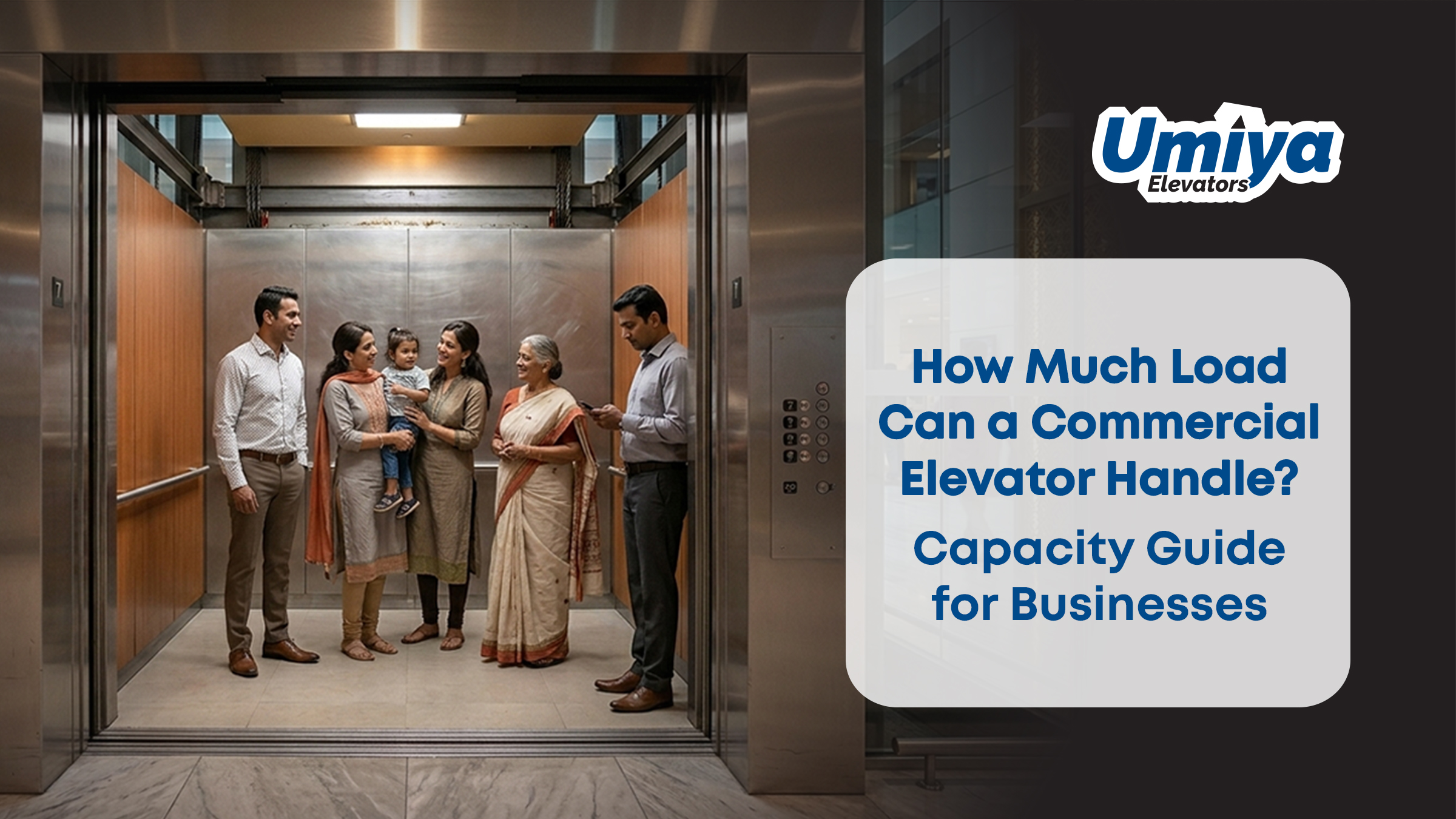
Choosing the right capacity is one of the most important decisions when installing a commercial elevator. Whether it’s a showroom, office, or industrial setup, the elevator must handle daily usage without delays or overloading.
For businesses, understanding load capacity helps in planning efficient operations and avoiding future limitations.
What does elevator load capacity mean?
Load capacity refers to the maximum weight a lift can safely carry in one trip. This includes the combined weight of people or goods, depending on the type of elevator.
For a commercial elevator, capacity is usually measured in kilograms and is directly linked to:
- Number of users per trip
- Type of building
- Frequency of use
Selecting the right capacity ensures smooth and safe performance.
What is the typical capacity of a commercial elevator?
Capacity varies based on the application and building size.
General capacity ranges include:
- Small commercial spaces: lower capacity for limited users
- Medium office buildings: moderate capacity for daily movement
- Large commercial complexes: higher capacity for heavy footfall
Passenger lifts are usually designed for people movement, while goods elevator lifts are built to handle heavier loads.
How many people can a passenger lift carry?
Passenger lifts are designed based on the number of people per trip.
Typical considerations:
- Small lifts handle fewer users
- Medium-sized lifts are suitable for offices
- Larger lifts are used in commercial complexes
The goal is to ensure that people can move comfortably without overcrowding, especially during peak hours.
What capacity is required for goods elevator lifts?
Goods elevator lifts are designed for transporting materials, so their capacity is higher than passenger systems.
Capacity depends on:
- Type of goods being moved
- Weight per load
- Frequency of operations
For example:
- Retail stock movement requires moderate capacity
- Industrial usage may need heavy-duty systems
Choosing the correct capacity helps prevent overloading and ensures safe operation.
How do you calculate the right capacity for your business?
Capacity planning depends on real usage needs.
Key factors to evaluate:
- Number of floors
- Peak traffic hours
- Nature of business operations
- Type of users or materials
For example:
- A showroom may prioritize customer movement using passenger lifts
- A warehouse may focus on goods elevator lifts for heavy materials
Accurate planning ensures the elevator performs efficiently without delays.
What happens if elevator capacity is too low?
Selecting a lower capacity than required can create operational issues.
Common problems include:
- Overcrowding in passenger lifts
- Increased waiting time
- Frequent wear and tear
- Risk of overloading
For businesses with high usage, underestimating capacity can affect both efficiency and safety.
Is it better to choose a higher capacity elevator?
In many cases, slightly higher capacity is beneficial.
Advantages include:
- Better handling of peak traffic
- Reduced waiting time
- Improved long-term usability
However, capacity should be balanced with space availability and actual usage needs.
Does building type affect elevator capacity?
Yes, different commercial spaces have different requirements.
Office buildings:
Focus on passenger lifts with moderate to high capacity.
Showrooms and retail stores:
Require smooth customer movement with balanced capacity.
Warehouses and industrial units:
Depend on goods elevator lifts with higher load handling.
In Gujarat’s growing commercial spaces, matching capacity to building type is essential for efficiency.
How does capacity impact space and installation?
Higher capacity elevators require:
- Larger cabin size
- Bigger shaft space
- Stronger structural support
During construction, planning commercial elevators with the right capacity helps avoid redesign later.
Conclusion
Understanding load capacity is essential when selecting commercial elevators. The right capacity ensures smooth movement, reduces waiting time, and supports daily operations without stress on the system.
For businesses in Gujarat, whether installing passenger lifts or goods elevator lifts, the focus should be on actual usage, peak demand, and future growth. Proper capacity planning leads to better efficiency, safer operations, and long-term reliability.