


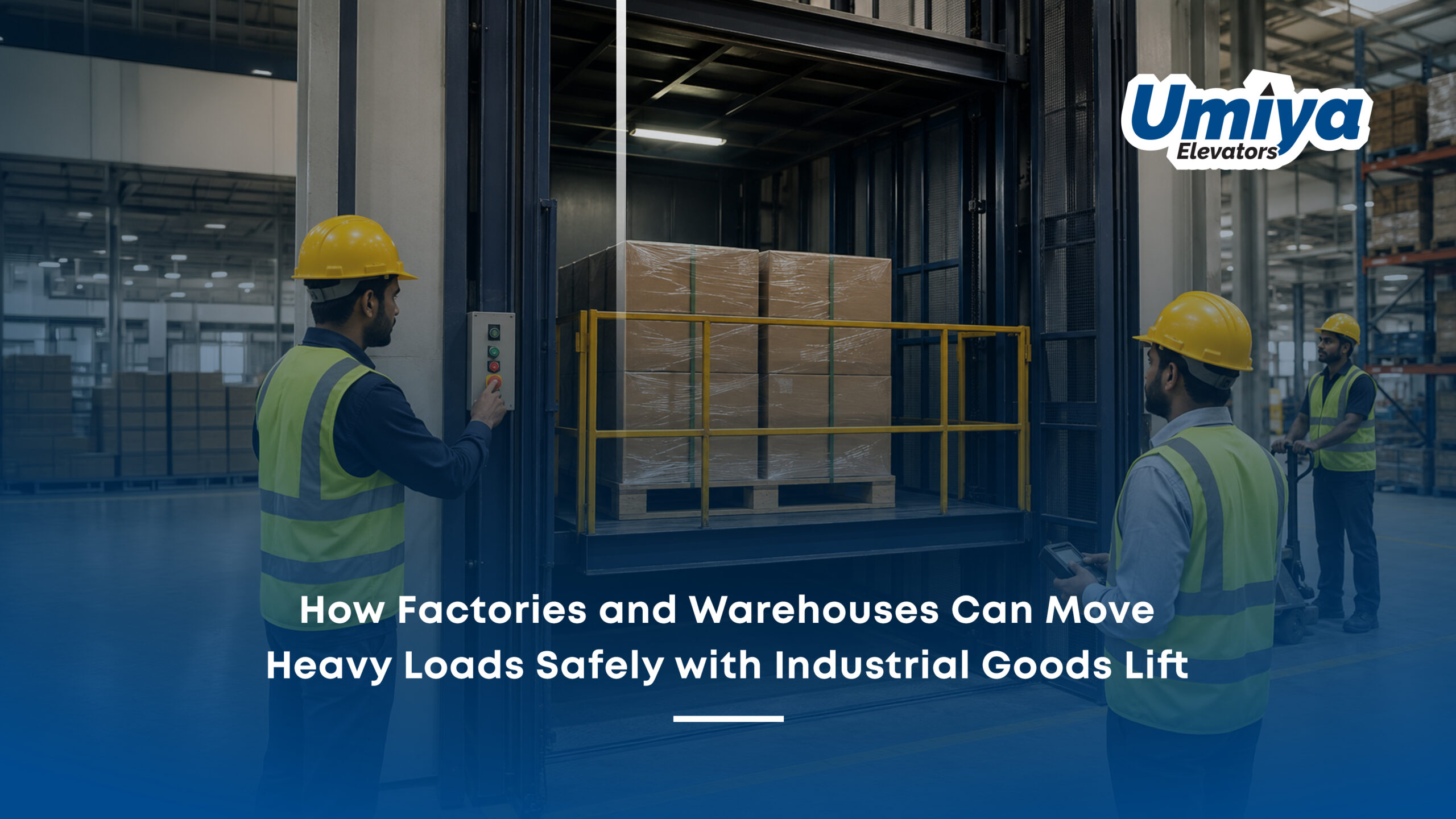
Factories and warehouses depend on smooth material movement. From raw materials and packed goods to tools, machine parts, and inventory, heavy loads often need to move between floors several times a day. When this movement is done manually, it can slow operations, increase worker strain, and create safety risks.
An industrial goods lift helps businesses move heavy loads safely and efficiently. For manufacturing units, storage facilities, distribution centers, and commercial buildings in Gujarat, it is a practical solution for improving workflow while reducing manual handling.
What is an industrial goods lift?
An industrial goods lift is a lift system designed to carry materials, equipment, and heavy items between floors. Unlike passenger lifts, it is built mainly for load movement rather than people movement.
These lifts are commonly used in:
- Factories
- Warehouses
- Manufacturing units
- Storage facilities
- Industrial buildings
- Retail stock areas
- Logistics centers
The main purpose of an industrial goods elevator is to make material handling safer, faster, and more organized.
Why do factories need industrial goods lifts?
Factories often handle materials at different stages of production. Raw material may need to move to one floor, finished goods to another, and equipment may need to be shifted regularly.
An industrial goods lift helps factories by:
- Reducing manual lifting
- Moving heavy materials safely
- Improving production flow
- Saving operational time
- Reducing dependency on labor for floor-to-floor movement
For factories with multi-level operations, goods lifts become an important part of daily productivity.
How do warehouses benefit from industrial goods lifts?
Warehouses require constant movement of inventory. If goods are stored across multiple floors, manual movement can become slow and inefficient.
An industrial goods elevator helps warehouses manage:
- Bulk inventory movement
- Carton and package transfer
- Stockroom operations
- Loading and unloading support
- Faster internal logistics
For warehouses in growing industrial areas around Ahmedabad and other cities in Gujarat, goods lifts help improve storage efficiency and operational speed.
How does an industrial goods lift improve workplace safety?
Heavy load movement can be risky when handled manually. Workers may face injuries due to lifting, carrying, or moving goods on staircases.
An industrial goods lift improves safety by:
- Reducing manual carrying of heavy loads
- Preventing staircase movement with materials
- Lowering the risk of product damage
- Supporting stable floor-to-floor transport
- Helping maintain organized movement paths
Safety is one of the biggest reasons factories and warehouses invest in proper goods lift systems.
What load capacity should businesses consider?
The right capacity depends on the type of materials being moved.
Before selecting an industrial goods elevator, businesses should evaluate:
- Average load per trip
- Maximum expected load
- Size of goods or equipment
- Frequency of movement
- Number of floors served
A warehouse moving cartons may need a different capacity than a factory moving heavy machinery parts. Choosing the correct capacity helps prevent overloading and supports long-term performance.
What features should an industrial goods lift have?
A reliable industrial goods lift should be designed for daily commercial and industrial use.
Important features include:
Strong platform or cabin structure
The lift should be strong enough to handle regular load movement safely.
Overload protection
This feature helps prevent operation when the load exceeds the safe limit.
Secure doors and locking system
Proper door locking improves safety during loading, unloading, and movement.
Smooth movement control
Stable operation reduces the risk of goods shifting during travel.
Easy loading and unloading access
Wide openings and proper platform height make daily operations smoother.
These features help businesses use the lift efficiently without compromising safety.
Is an industrial goods lift different from a passenger lift?
Yes, both are designed for different purposes.
A passenger lift is designed to carry people comfortably and safely. It focuses on ride quality, interiors, and user convenience.
An industrial goods elevator is designed to move materials and heavy loads. It focuses on strength, capacity, durability, and safe handling.
Businesses should not use a passenger lift as a regular material movement solution. If goods are moved frequently, a dedicated industrial goods lift is safer and more practical.
Can factories install an industrial goods lift in an existing building?
Yes, many industrial goods lifts can be installed in existing factories and warehouses.
Installation options may include:
- Internal shaft installation
- External lift structure
- Customized platform lift design
- Service-area installation
The right option depends on building structure, available space, floor height, and load requirement. A proper site inspection helps identify the most suitable solution.
Why should businesses work with experienced passenger lift manufacturers?
While the requirement may be for goods movement, working with experienced passenger lift manufacturers or lift solution providers gives businesses access to better technical planning and installation support.
A capable lift provider can help with:
- Load capacity selection
- Space assessment
- Lift type recommendation
- Safety planning
- Installation support
- Maintenance guidance
Businesses should choose a provider that understands both commercial lifts and industrial goods lift requirements.
Why is lift AMC important for industrial goods lifts?
An industrial goods lift often handles heavy loads and frequent usage. This makes regular maintenance essential.
A lift AMC helps ensure:
- Routine safety checks
- Load system inspection
- Motor and control servicing
- Door mechanism checking
- Preventive maintenance
- Reduced chances of sudden breakdown
For factories and warehouses, downtime can affect daily operations. A reliable lift AMC plan helps maintain performance and reduces service interruptions.
What should businesses check before installing an industrial goods lift?
Before installation, businesses should evaluate:
- Load capacity requirement
- Available space
- Floor-to-floor movement needs
- Loading and unloading area
- Safety features
- Electrical requirements
- Maintenance support
Planning these factors early helps avoid installation delays and operational issues later.
How does an industrial goods lift support business efficiency?
An industrial goods lift improves more than just material movement.
It helps businesses achieve:
- Faster internal logistics
- Better worker productivity
- Safer goods handling
- Reduced material movement delays
- Better use of vertical storage space
For growing factories and warehouses, it becomes an important investment in operational efficiency.
An industrial goods lift is a practical solution for factories, warehouses, and commercial storage spaces that need to move heavy loads safely between floors. It reduces manual handling, improves workflow, supports worker safety, and helps businesses manage materials more efficiently.
For businesses in Gujarat, selecting the right lift depends on load capacity, building layout, usage frequency, safety features, and maintenance support. While passenger lifts are meant for people, an industrial goods lift is designed for strength and heavy-duty performance.
Working with experienced passenger lift manufacturers or lift providers ensures better planning, proper installation, and reliable service support. With a structured lift AMC plan, factories and warehouses can keep their goods lift operating safely and efficiently for long-term use.