


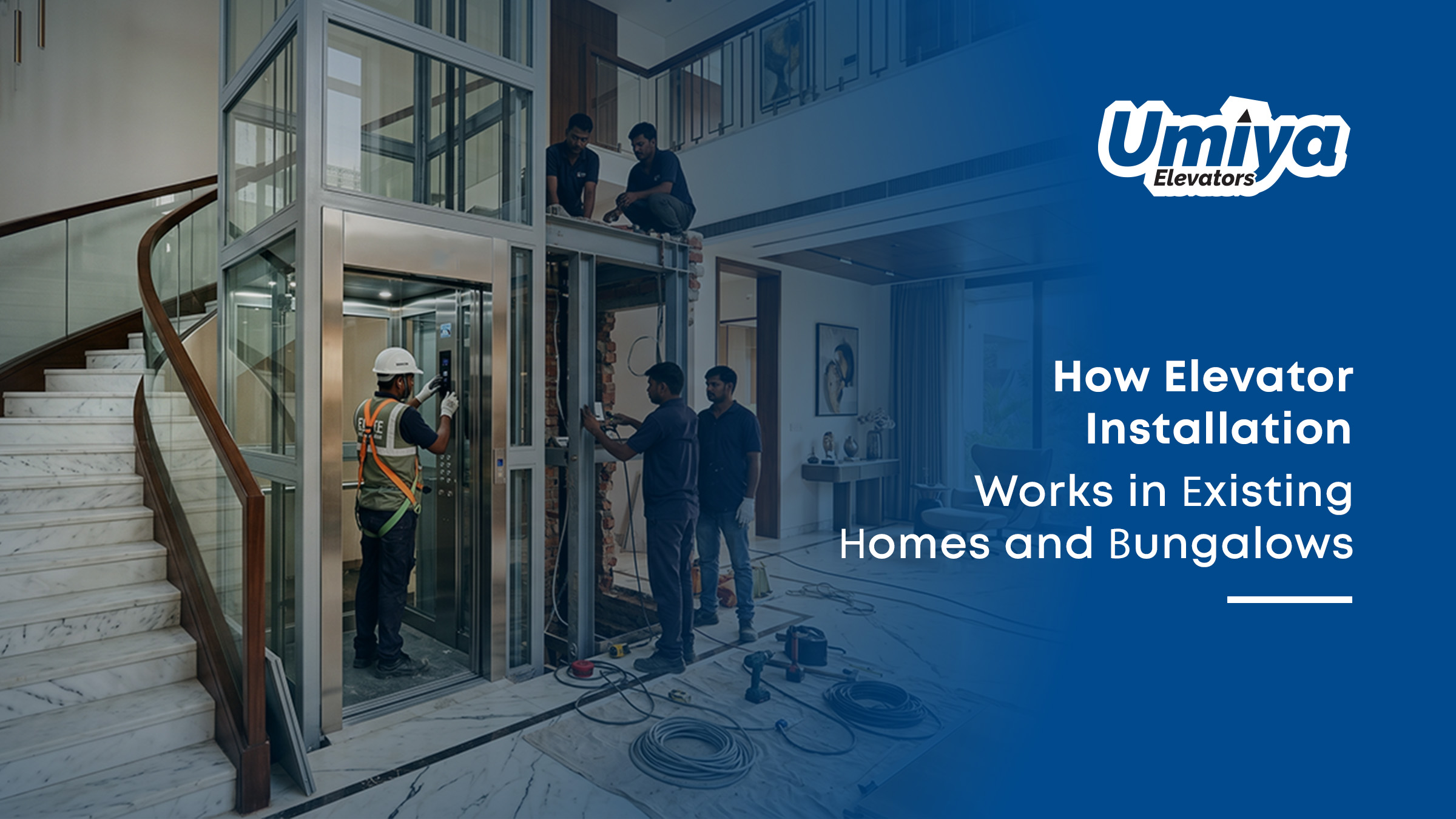
Many homeowners assume that elevators can only be installed during the construction stage. In reality, modern elevator installation solutions are now designed to work efficiently in existing homes, including bungalows, duplex houses, and villas.
Across Gujarat, homeowners are increasingly upgrading their properties with residential elevators to improve accessibility, convenience, and long-term usability without requiring complete structural redesign.
Can elevators be installed in existing homes?
Yes, modern residential elevators can be installed in already constructed homes.
With compact designs and flexible installation methods, elevators now fit into:
- Existing bungalows
- Duplex homes
- Villas
- Independent residential properties
A proper site assessment helps determine the most suitable installation approach based on available space and home structure.
Why are homeowners adding elevators after construction?
There are several practical reasons homeowners choose elevator installation later.
Common reasons include:
- Elderly family members requiring easier movement
- Reduced convenience of stair usage over time
- Long-term accessibility planning
- Property upgrades and renovations
- Improved comfort in multi-floor homes
Many bungalow owners in Ahmedabad, Surat, and Vadodara are now installing residential elevators during renovation projects.
Where can elevators be installed inside existing homes?
Modern small elevators for home are designed for flexible placement.
Common installation areas include:
Staircase voids
The empty space between staircases is one of the most common installation locations.
Adjacent wall spaces
Compact lift systems can often fit beside walls with minimal layout changes.
External structures
When indoor space is limited, elevators can be installed externally using glass or steel shaft structures.
Unused corners
Some mini elevator for home systems are designed specifically for compact residential layouts.
The final placement depends on the home’s structure and accessibility requirements.
What type of residential elevator is best for existing homes?
The right lift type depends on space availability and operational needs.
Machine room-less elevators
These are highly preferred because they:
- Require less installation space
- Do not need a separate machine room
- Fit compact residential layouts
Hydraulic residential elevators
Suitable for low-rise bungalow homes where smooth operation is important.
Compact home lifts
Mini elevator for home systems are often selected for existing houses with limited installation space.
A professional evaluation helps determine which system suits the property best.
Does elevator installation require major structural changes?
Not always. Modern residential elevators are designed to minimize construction impact.
Possible modifications may include:
- Small shaft preparation
- Floor opening adjustments
- Electrical setup
- Structural reinforcement in some cases
Compact systems significantly reduce the need for large-scale renovation work.
How much space is required for small elevators for home?
Most residential systems are designed to fit compact areas.
Typical requirements include:
- Limited shaft space
- Minimal pit depth depending on lift type
- Standard overhead clearance
Many homeowners are surprised that small elevators for home can fit comfortably into existing bungalow layouts.
How long does elevator installation take?
Installation timelines vary depending on:
- Home structure
- Lift type
- Civil work requirements
- Customization needs
The process usually involves:
- Site inspection
- Design planning
- Structural preparation
- Lift installation and testing
Planning the installation properly helps reduce delays and ensures smoother execution.
Are residential elevators safe for family use?
Yes, modern residential elevators include multiple safety systems designed for daily household usage.
Common safety features include:
- Automatic door sensors
- Emergency stop systems
- Backup support during power interruptions
- Smooth movement control systems
These features make elevators suitable for elderly family members and everyday residential use.
What maintenance is required after installation?
Routine maintenance helps ensure smooth operation and long-term reliability.
Typical servicing includes:
- Mechanical inspections
- Safety system testing
- Motor and control checks
- General servicing and adjustments
Most homeowners choose annual maintenance support after elevator installation.
Does adding an elevator increase property value?
Yes, homes with residential elevators are often considered more functional and future-ready.
Benefits include:
- Improved accessibility
- Better convenience
- Enhanced premium appeal
- Increased long-term usability
In many modern residential areas across Gujarat, bungalow elevators are now viewed as a valuable home upgrade.
Conclusion
Elevator installation in existing homes is now more practical than ever. With compact systems, flexible placement options, and modern residential designs, homeowners can add elevators without major structural disruption.
Whether choosing small elevators for home or a customized mini elevator for home solution, proper planning ensures smooth installation and reliable daily usage. For bungalow and villa owners across Gujarat, residential elevators provide a practical way to improve accessibility, comfort, and long-term living convenience.