


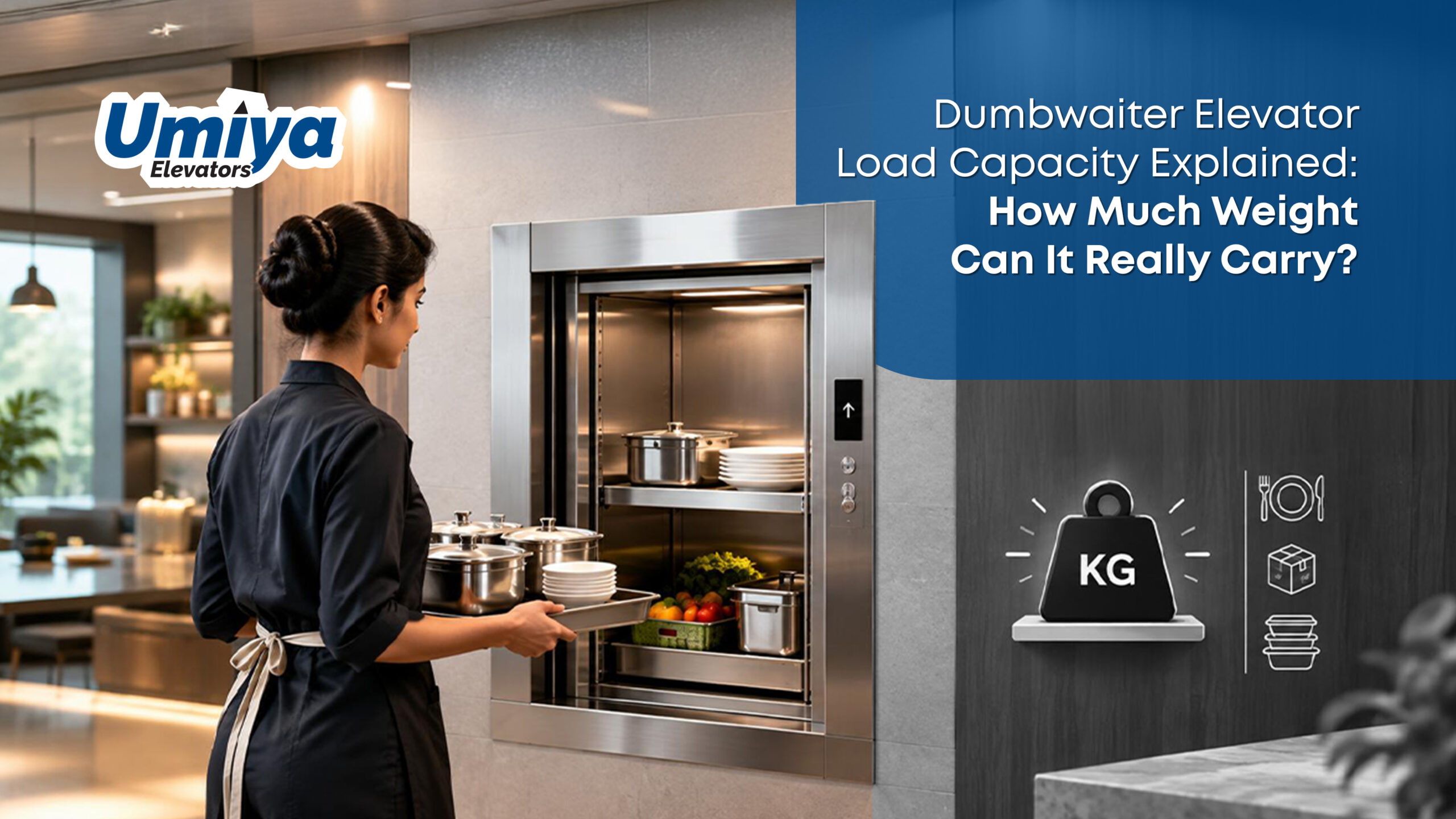
A dumbwaiter elevator is not simply “small,” and its safe load is not guessed from cabin size. Capacity is determined by the rated design, usable car area, structure, suspension and safety provisions. In India, current BIS guidance sets clear limits, so choosing the right model starts with what you actually move every day.
Table of Contents
- What does a dumbwaiter’s rated capacity really mean?
- How is capacity matched to the cabin and application?
- How should you choose the right capacity for your building?
- Conclusion
- FAQs
A restaurant lift may carry plates and serving dishes. A hospital unit may move medicines or supplies. A home unit might carry groceries between floors. They look similar, but the working load can be very different.
That is why the number on the specification sheet matters. The elevator weight limit is an engineering rating, not a rough estimate based on whether another tray can physically fit. Before choosing a model, understand what the rating means, what Indian standards say and how your busiest real-world load compares.
1. What does a dumbwaiter elevator rated capacity really mean?
The current Indian standard for dumbwaiters is IS 17900 (Part 20):2024, covering planning, installation, operation and maintenance. BIS continues to list it in its 2026 lift-standards programme. It replaced the relevant service-lift sections of IS 14665 after the transition ended in May 2025.
A dumbwaiter is intended for materials, not passengers. Its rated load is tied to usable car area through L = 250 × A², where L is kilograms and A is net inside area in square metres. Rated load is capped at 250 kg and platform area at 1 m².
That makes elevator capacity explained more useful than simply saying “100 kg model.”
Think of kg vs load rating: kilograms are the displayed unit; rated load is the maximum designed load for the approved configuration.
An overload sensor can stop operation above the specified capacity. Umiya’s product information describes overload protection that prevents operation beyond the set limit.
2. How is capacity matched to the cabin and application?
One common misunderstanding is cabin size vs capacity. A larger cabin does not automatically mean you can keep adding weight.
The National Building Code of India 2016 gives recommended dumbwaiter dimensions for 100, 150, 200 and 250 kg loads. Car dimensions increase as rated load rises, showing why size and design capacity are considered together.
So how capacity is calculated should be discussed before shaft and cabin dimensions are frozen.
2.1 Why does load distribution matter?
Placing 100 kg evenly across the cabin differs from concentrating most of it in one corner. Secure items, keep heavy objects stable and follow the manufacturer’s loading instructions. Shelves do not increase rated capacity.
For kitchens, capacity planning for kitchens should use the heaviest realistic service run, including trays, utensils, containers and food travelling together at peak time.
2.2 Is there a simple capacity chart you can use?
A small lift capacity chart can help early planning, but it cannot replace the specification.
Ask:
- What is the heaviest single item?
- How many trays travel together?
- Could staff combine loads?
- Does the cabin need shelving?
- Will peak-period use change?
- What rating provides a practical safe capacity margin?
Use workflow, not a guess.
2.3 Does more capacity always make the lift better?
No. Higher capacity can affect the car, supporting structure, drive, shaft requirements and project cost.
There can also be a capacity vs speed trade-off depending on system design and motor selection. A heavier-rated unit will not necessarily match every lighter model’s speed.
Capacity, speed and dimensions should be specified together.
3. How should you choose the right capacity for your building?
Start with what the lift will carry. For a restaurant, list loaded trays, dishes and service equipment. For a clinic, list medicines and supplies. For a home, consider groceries or laundry. Then identify the heaviest realistic trip.
At Umiya Elevators, planning can begin with the building and usage pattern. Its dumbwaiter solutions describe compact lifts for food, documents, medicines, laundry and other light materials.
Confirm the final rating in writing and make sure users understand that repeated overloading is not normal operation.
3.1 What should you verify before approving the specification?
Use this checklist:
- Confirm the maximum planned load.
- Confirm rated capacity and car dimensions.
- Check shelf positions.
- Confirm overload protection and door interlocks.
- Review shaft, travel and power requirements.
- Ask which current IS code capacity standards apply.
- Confirm inspection and handover documents.
Capacity certification should relate to the installed lift, not only a brochure for a similar model.
A clear elevator capacity explained discussion should cover usage habits too. If your team regularly needs 160 kg, a 150 kg unit is not sensible planning.
4. Conclusion
A dumbwaiter elevator should be sized around real loads, not assumptions. The right capacity considers car area, structural design, drive, suspension, safety devices and the materials your team moves during its busiest routine.
Do not choose purely by the largest number in a brochure. Oversizing can change dimensions and cost without solving a real need. Start with the heaviest realistic load, verify the applicable standard and make sure the final rating is clearly documented.
A good capacity decision feels almost boring later: the lift simply carries what it was designed to carry, day after day, without guesswork.
FAQs
1. How much weight can a dumbwaiter carry in India?
Under IS 17900 (Part 20):2024, a dumbwaiter’s rated load is not more than 250 kg, with net platform area limited to 1 m². Individual installations can be rated below that maximum. Always follow the rating shown for the specific unit rather than assuming every dumbwaiter can carry the standard’s maximum.
2. Can I put 100 kg into a 100 kg dumbwaiter every trip?
The stated elevator weight limit is the rated maximum for that installation, but loading still needs to follow the manufacturer’s instructions. Items should be stable and appropriately distributed. If your normal workflow repeatedly sits at the maximum, discuss whether the selected capacity gives enough practical operating headroom.
3. Does a larger dumbwaiter cabin automatically carry more weight?
No. Cabin volume and rated load are related design considerations, but available space is not permission to exceed the stated capacity. The drive, suspension, supporting structure and safety provisions are designed around a specific rating. Check the load plate and approved specification before changing how the lift is used.
4. What capacity is suitable for a restaurant dumbwaiter?
There is no single restaurant capacity because a café moving a few trays has different needs from a banquet kitchen serving several floors. Weigh the busiest realistic batch, include trays and containers, and discuss that figure with the manufacturer. Capacity should match workflow while leaving sensible operating headroom.
5. Can I increase the capacity of an existing dumbwaiter elevator later?
Do not treat capacity as a software setting that can simply be increased. A higher rating can affect the drive, suspension, car, supports, safety provisions and other components. Any proposed change should be assessed by a qualified lift professional against the applicable standard and the existing installation before approval.