


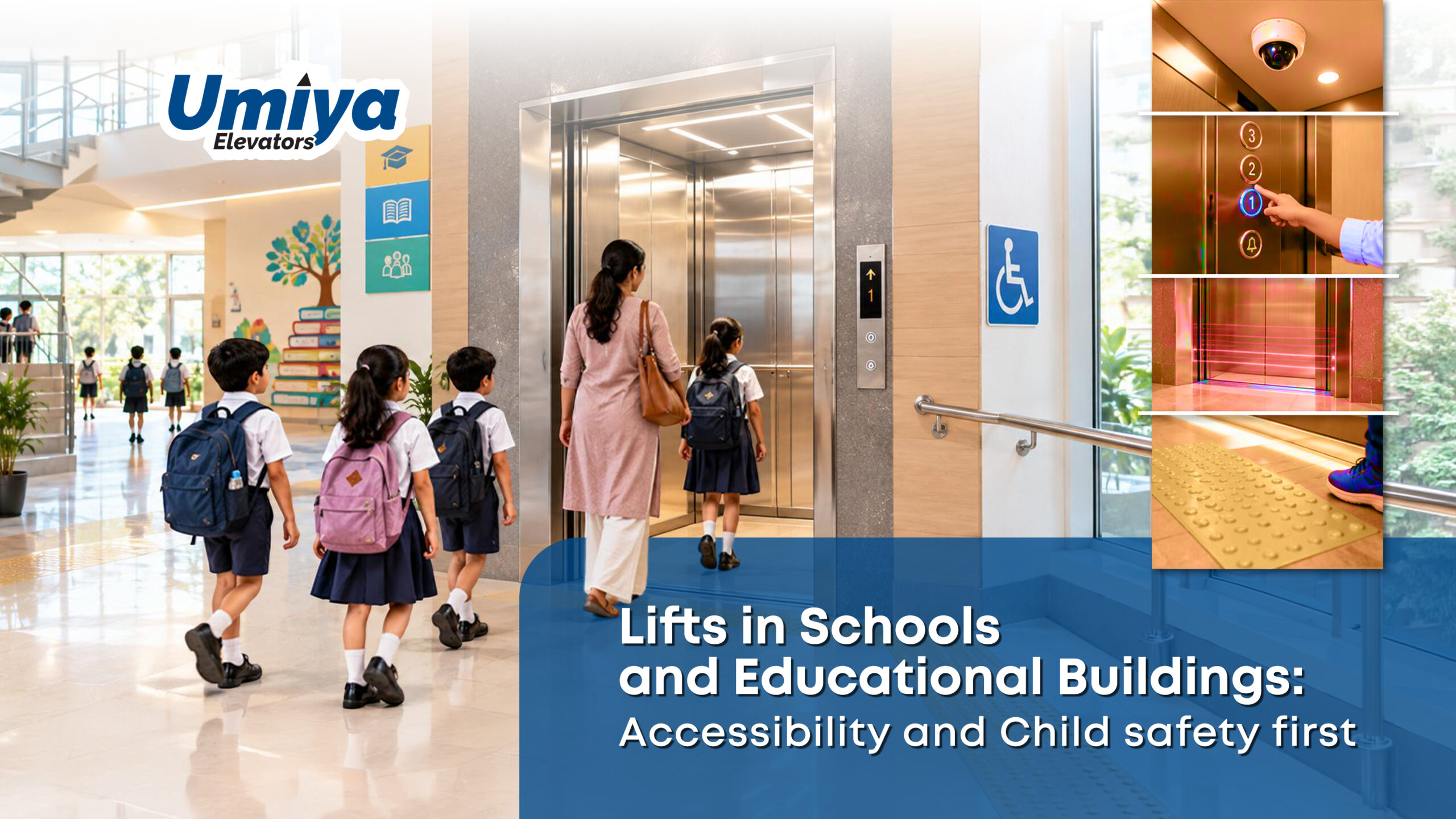
Schools, colleges, coaching centres, and educational buildings need safe movement for students, teachers, staff, parents, and visitors. In multi-floor campuses, lifts are not only about convenience. They support accessibility, inclusion, emergency planning, and daily building management.
For educational buildings, lift planning must be handled carefully because children use the space every day. A responsible elevator company in Ahmedabad should help school owners and architects select a lift that supports safety, accessibility, and practical daily use.
Why do educational buildings need lifts?
Educational buildings serve different types of users. Students, teachers, admin staff, parents, visitors, and support teams may all need access to different floors.
Lifts are especially important for:
- Students with disabilities
- Injured students or staff
- Elderly visitors
- Parents attending meetings
- Movement of school materials
- Administrative access
- Multi-floor campus planning
A lift helps make the building more accessible and easier to use for everyone.
Why is accessibility important in schools?
Accessibility ensures that students and visitors with mobility limitations can use the building with dignity. A school should not become difficult to access simply because classrooms, labs, libraries, or offices are located on upper floors.
Accessible lift planning helps with:
- Equal access to learning spaces
- Easier movement for wheelchair users
- Better parent and visitor access
- Practical campus management
- Future-ready building design
Educational buildings should plan accessibility early rather than adding it later as a difficult modification.
What type of lift is suitable for schools?
The right lift depends on the size and usage of the building.
A small school may need a simple passenger lift for basic floor access. A larger school, college, or institute may need a higher-capacity lift because student movement can be heavy during peak times.
Before finalizing the lift, owners should consider:
- Number of floors
- Student strength
- Staff movement
- Peak usage timing
- Accessibility needs
- Available shaft space
- Maintenance support
An experienced elevator company in Ahmedabad can inspect the site and recommend a lift based on actual building use.
What child safety features should be considered?
Child safety should be one of the first priorities in school lift planning.
Important safety features may include:
- Automatic door sensors
- Emergency alarm
- Overload protection
- Smooth start and stop
- Anti-skid cabin flooring
- Clear floor indicators
- Safe door closing speed
- Emergency communication option
- Proper lighting inside the cabin
The lift should be easy to use but not easy to misuse. Schools should also place clear instructions near the lift.
Should children use lifts without supervision?
For younger students, lift use should be supervised. Schools should create simple rules for lift usage, especially during dispersal time, lunch breaks, or activity periods.
Good practices include:
- Allowing younger children only with staff supervision
- Avoiding overcrowding
- Preventing jumping or playing inside the lift
- Keeping hands away from doors
- Not forcing doors open
- Reporting unusual noise or stoppage quickly
A lift is safe when it is installed properly, maintained regularly, and used responsibly.
How should lift placement be planned in a school?
Lift placement affects daily movement. It should be easy to access but not placed where it creates crowding.
Good lift placement should consider:
- Main entrance access
- Wheelchair movement path
- Classroom zones
- Admin office access
- Medical room access
- Fire exit planning
- Student crowd movement
- Staff supervision
The lift should not block corridors or create a rush point during school start and end times.
What capacity should a school lift have?
Capacity should be selected based on real usage. A lift that is too small may create waiting time and crowding. A lift that is too large may not suit the available space or building structure.
For educational buildings, capacity planning should consider:
- Number of students
- Staff movement
- Wheelchair access
- Peak-hour use
- Exam or event days
- Parent meeting days
The goal is not to choose the biggest lift. The goal is to choose the most practical lift for the building.
Why is maintenance important in school lifts?
School lifts need regular maintenance because safety expectations are high. A small fault in a lift used by children should never be ignored.
Regular maintenance helps check:
- Door sensors
- Door interlocks
- Alarm system
- Brake function
- Cabin movement
- Control panel
- Floor levelling
- Emergency systems
- Electrical safety
Schools should keep AMC records and service reports properly. This helps management track whether the lift is being maintained on time.
What should schools do during power failure or lift stoppage?
Schools should have a simple response plan. Staff members should know whom to call and how to keep students calm if the lift stops.
Important steps include:
- Do not force the doors open
- Contact the lift service provider
- Keep communication with the person inside
- Avoid panic
- Restrict crowding near the lift
- Inform trained maintenance staff
- Follow emergency instructions
The lift provider should explain emergency operation during handover and maintenance visits.
What should school owners ask before installation?
Before selecting a lift, school owners should ask:
- Is this lift suitable for educational building use?
- What child safety features are included?
- Is wheelchair access properly supported?
- What is the recommended capacity?
- What emergency features are provided?
- How often will maintenance be required?
- Is AMC support available?
- What documents will be provided?
- What user instructions should be displayed?
Clear answers help school owners make a safer and more informed decision.
Why choose the right elevator company?
Educational buildings need more than basic lift installation. They need planning that considers safety, accessibility, children, daily crowd movement, and long-term maintenance.
A reliable elevator company in Ahmedabad can help with:
- Site inspection
- Lift type selection
- Capacity guidance
- Safety feature explanation
- Installation planning
- Maintenance support
- AMC guidance
The right provider helps ensure that the lift serves the school safely for years.
Conclusion
Lifts in schools and educational buildings should be planned with accessibility and child safety at the centre. They help students, staff, parents, and visitors move comfortably while supporting inclusive building design.
For school owners and builders, the key is to choose the right lift type, plan the location carefully, include proper safety features, and maintain the system regularly. Working with a reliable elevator company in Ahmedabad can make the process smoother and more practical.
A school lift should not only move people between floors. It should make the building safer, more accessible, and easier to use for everyone.