


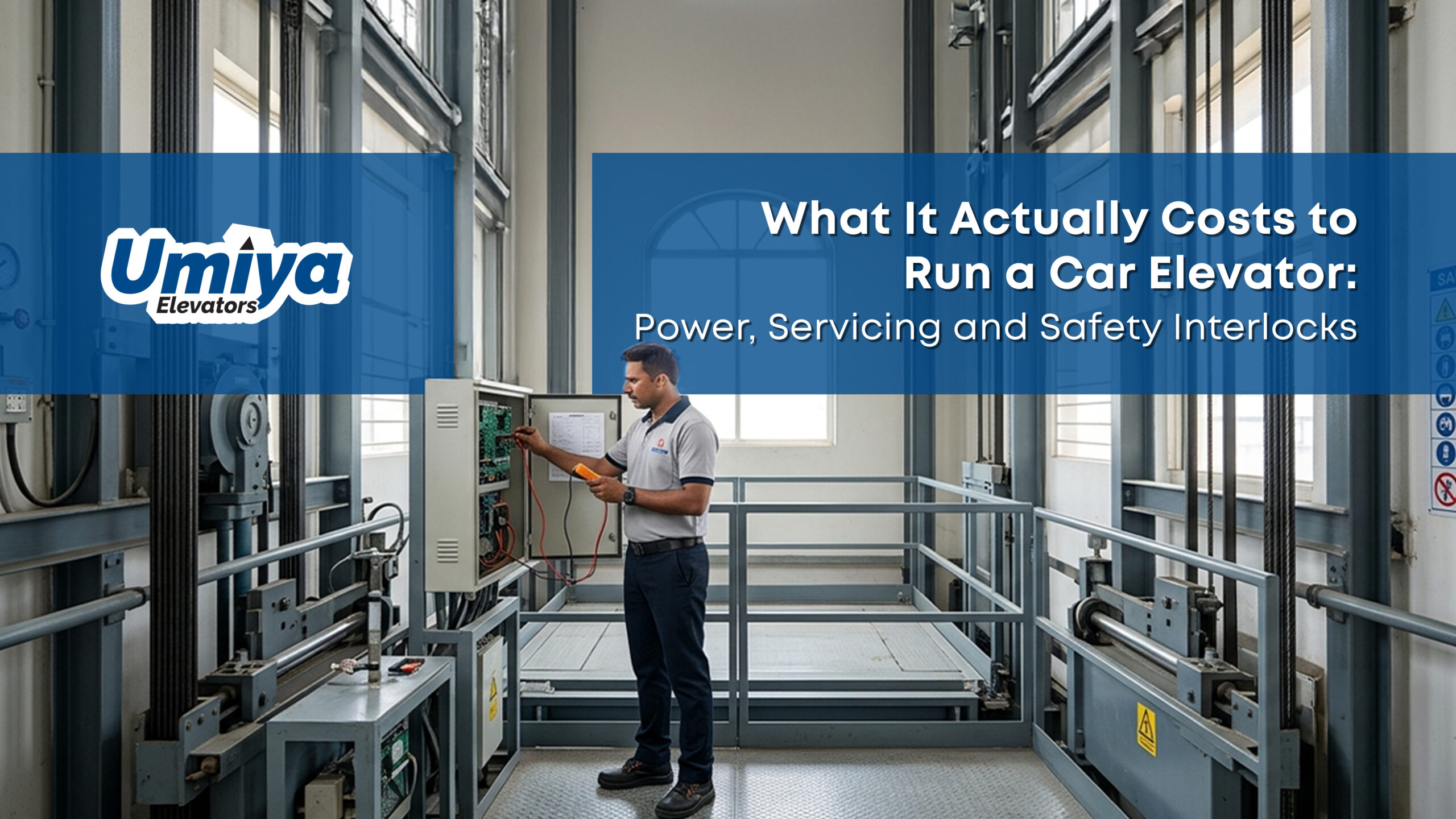
A car elevator is useful for bungalows, showrooms, workshops, basement parking, and commercial buildings where ramp space is limited. But before installation, most owners ask one practical question: what will it cost to run every month?
The answer depends on power use, number of daily trips, servicing needs, safety interlocks, and long-term maintenance. This is why choosing proper elevator maintenance services is as important as choosing the car elevator itself.
What affects the running cost of a car elevator?
A car elevator does not consume power like a machine that runs all day. It uses power mainly during movement. So the running cost depends on how often it is used and how much load it carries.
Important cost factors include:
- Motor capacity
- Number of trips per day
- Travel height
- Vehicle weight
- Lift type
- Power tariff category
- Maintenance schedule
- Safety system condition
- Frequency of repairs
For example, a bungalow car elevator used a few times a day will have a different running cost than a showroom or workshop lift used repeatedly.
How much power does a car elevator use?
Power consumption depends on motor rating and usage time. The simple idea is:
Motor power × running time = electricity units consumed
However, the actual units can vary because the lift may not run continuously. It moves for short durations during each trip. Load weight, lift design, drive system, and starting current can also affect consumption.
Instead of assuming a fixed monthly amount, owners should ask the lift provider for expected power consumption based on:
- Lift capacity
- Travel height
- Motor rating
- Daily trip estimate
- Type of vehicle
- Usage pattern
This gives a more realistic estimate than a generic number.
Why should the electricity tariff be checked separately?
Electricity cost depends on the applicable tariff category. A residential bungalow, commercial showroom, factory, or workshop may fall under different electricity billing categories.
So even if two car elevators consume similar power units, the monthly electricity cost may differ based on the building’s electricity connection and tariff.
Property owners in Gujarat should always check their current electricity bill category before estimating running cost. A lift provider can estimate units, but the final rupee cost depends on the applicable tariff.
How does the usage pattern change monthly costs?
Usage patterns make a big difference.
A car elevator used only for home parking may run a few trips per day. A car showroom may use it more often to move vehicles between floors. A garage or workshop may use it with different vehicle weights and more frequent movement.
Monthly power use increases when:
- Trips are frequent
- Vehicles are heavier
- Travel height is higher
- Lift is used during peak business hours
- System is not maintained properly
- Doors or controls cause repeated delays
Good elevator maintenance services help keep the system efficient by reducing friction, misalignment, and avoidable operational strain.
What servicing does a car elevator need?
A car elevator handles heavy loads, so routine servicing is essential. It should not be treated like a basic parking accessory.
Regular servicing may include:
- Motor inspection
- Platform condition check
- Door or gate operation check
- Safety lock inspection
- Control panel check
- Limit switch testing
- Guide system inspection
- Lubrication where required
- Noise and vibration check
- Load performance review
Servicing helps detect early signs of wear before they become breakdowns.
What usually increases servicing cost?
Servicing cost can increase when small problems are ignored.
Common reasons include:
- Irregular maintenance
- Overloading
- Poor platform alignment
- Door or gate damage
- Electrical faults
- Control panel issues
- Worn safety locks
- Weak limit switches
- Water entry in pit area
- Dust and debris around moving parts
For basement car elevators, pit drainage and water protection are especially important. Water near electrical or mechanical parts can create serious maintenance problems.
What are safety interlocks in a car elevator?
Safety interlocks are systems that prevent unsafe operation. They help ensure the car elevator runs only when basic safety conditions are satisfied.
For example, the lift should not move if the door or gate is not properly closed. It should not operate beyond safe travel limits. It should not run if overload protection is triggered.
Common safety interlocks may include:
- Door lock interlock
- Gate safety switch
- Overload protection
- Limit switches
- Emergency stop system
- Platform position sensors
- Anti-fall safety systems where applicable
- Control panel safety logic
These systems protect the vehicle, user, building, and lift mechanism.
Why do safety interlocks need maintenance?
Safety interlocks are used every time the car elevator operates. Over time, dust, misalignment, loose wiring, impact, or rough handling can affect them.
If interlocks fail, the lift may:
- Stop working
- Refuse to move
- Show repeated faults
- Require technician reset
- Create unsafe operation risk
This is why elevator maintenance services should include interlock checking as part of routine servicing.
Can poor maintenance increase power consumption?
Yes, poor maintenance can indirectly increase power consumption and operating effort.
For example:
- Misaligned parts create more resistance
- Poor lubrication increases friction
- Door faults cause repeated operation attempts
- Electrical issues reduce efficiency
- Worn components make movement rougher
A well-maintained car elevator usually runs smoother and avoids unnecessary strain on the system.
What should owners ask before installation?
Before installing a car elevator, owners should ask clear questions about running cost and maintenance.
Useful questions include:
- What is the motor rating?
- How many units may it consume based on expected use?
- What safety interlocks are included?
- What servicing schedule is recommended?
- What is covered in AMC?
- Are spare parts available locally?
- What happens if a safety interlock fails?
- How often should the lift be inspected?
- What maintenance access is required?
- Is the pit protected from water?
These questions help owners understand long-term ownership, not just installation.
Is AMC necessary for a car elevator?
Yes, AMC is strongly recommended for a car elevator because the system carries heavy vehicles and depends on safety controls.
A proper AMC helps with:
- Preventive maintenance
- Regular safety checks
- Interlock testing
- Breakdown support
- Better documentation
- Longer system life
- Reduced unexpected downtime
For commercial buildings, workshops, and showrooms, AMC becomes even more important because downtime can affect daily operations.
How can elevator maintenance services reduce long-term cost?
Professional elevator maintenance services help owners avoid expensive problems by finding small faults early.
They support:
- Smoother operation
- Safer movement
- Better power efficiency
- Fewer sudden breakdowns
- Longer component life
- Improved user confidence
The real cost of a car elevator is not only electricity. It also includes safety, reliability, maintenance, and downtime prevention.
Conclusion
The running cost of a car elevator depends on power use, daily trips, load, tariff category, servicing quality, and safety interlock condition. Since every building is different, owners should avoid fixed assumptions and request a site-based estimate before installation.
For bungalows, showrooms, workshops, and commercial buildings in Gujarat, regular elevator maintenance services help control long-term costs by keeping the system safe, smooth, and reliable.
A well-maintained car elevator does more than move vehicles. It protects the building investment, reduces daily hassle, and gives owners better confidence in long-term use.