


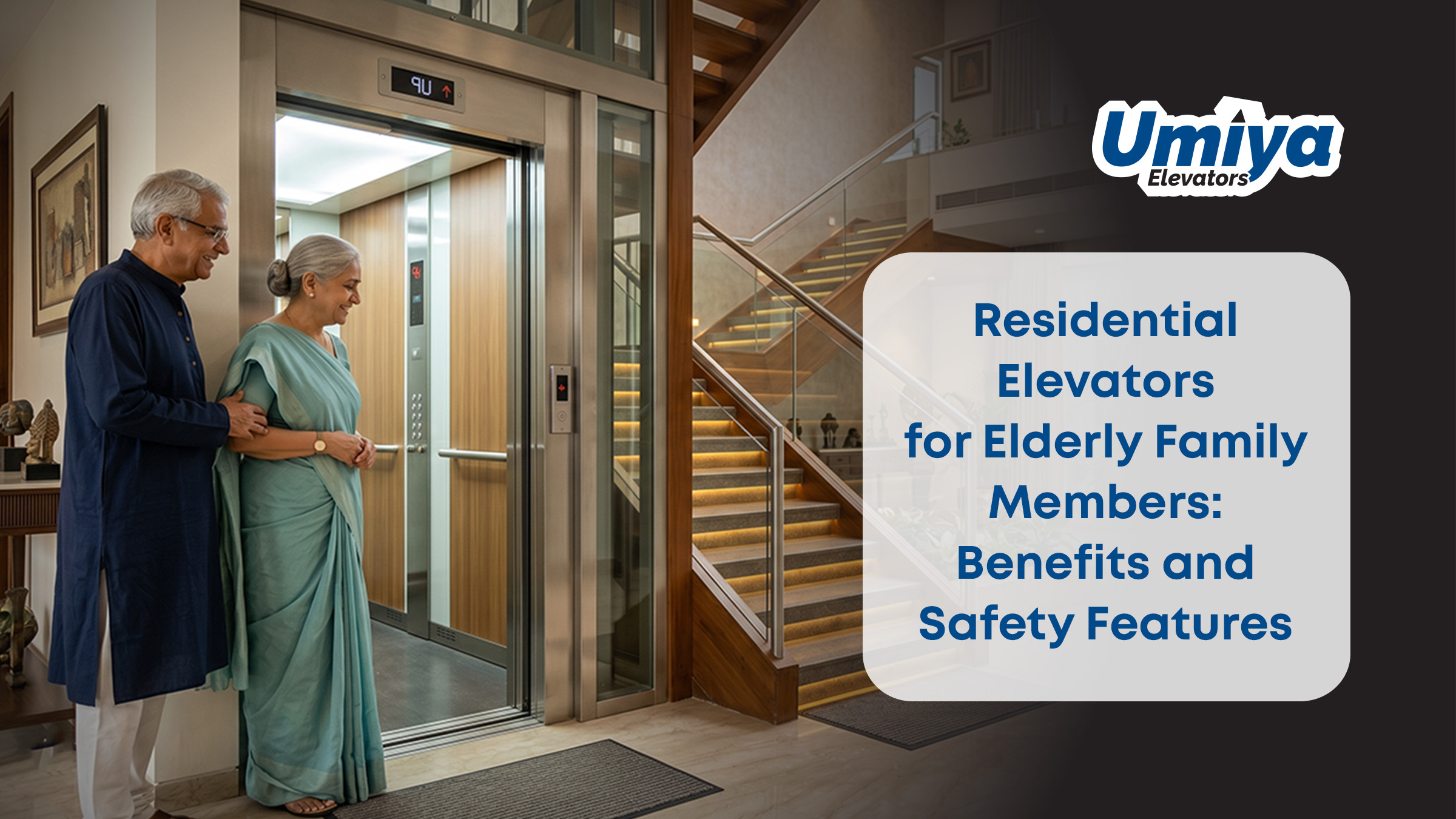
As families plan homes for long-term living, accessibility is becoming an important consideration. For elderly family members, daily stair usage can become physically challenging and increase the risk of falls or discomfort. This is one of the main reasons many homeowners are now choosing residential elevators for multi-floor homes.
Across Gujarat, bungalow owners and villa residents are increasingly installing compact lift systems to create safer and more convenient living environments for aging parents and senior family members.
Why are residential elevators useful for elderly family members?
Staircases can become difficult to manage with age, especially for individuals dealing with knee pain, mobility limitations, or balance-related concerns.
Residential elevators help by:
- Providing easier movement between floors
- Reducing physical strain
- Improving independence for elderly users
- Supporting safer daily movement inside the home
For families living in duplex homes and bungalows, elevators help elderly members continue using all parts of the home comfortably.
How do small elevators for home improve daily convenience?
Modern small elevators for home are designed to simplify everyday living.
Daily benefits include:
- Easy floor-to-floor access without stairs
- Comfortable movement while carrying personal items
- Reduced dependency on assistance from others
- Better accessibility during injuries or recovery periods
In many homes across Ahmedabad and Surat, elevators are now considered a practical long-term addition rather than just a luxury feature.
What safety features are included in residential elevators?
Safety is one of the most important aspects of modern residential elevators.
Common safety systems include:
Automatic door sensors
These sensors prevent doors from closing if something blocks the entrance.
Emergency stop systems
Users can immediately stop the elevator if required.
Backup support during power interruptions
Many systems include emergency power support for uninterrupted operation during electricity outages.
Smooth start and stop movement
This helps elderly users avoid sudden jerks during operation.
Alarm and communication systems
Emergency communication features provide additional safety support if assistance is needed.
These features make residential elevators suitable for daily family usage, especially in homes with elderly members.
Are mini elevators for home safe for senior citizens?
Yes, modern mini elevator for home systems are specifically designed to support residential accessibility.
They are generally:
- Easy to operate
- Designed with smooth movement
- Built with secure enclosed cabins
- Suitable for low-rise residential properties
Compared to regular stair usage, elevators often provide a safer and more comfortable mobility solution for elderly users.
What type of residential elevator is best for elderly-friendly homes?
The best system depends on home layout and accessibility requirements.
Machine room-less elevators
These are commonly preferred because they:
- Save installation space
- Operate smoothly and quietly
- Fit compact residential layouts
Hydraulic home elevators
Known for smooth movement and comfortable operation, especially suitable for low-rise bungalow homes.
Choosing the right elevator type helps improve both usability and long-term convenience.
Can elevators be installed in existing homes?
Yes, elevator installation is possible even in completed bungalow and villa properties.
Common installation options include:
- Staircase-area integration
- Wall-side installations
- External glass shaft systems
- Compact retrofitting solutions
Many families in Gujarat now upgrade older homes with small elevators for home to improve accessibility for elderly parents.
How much space is needed for residential elevators?
Modern residential elevators are designed for compact residential spaces.
They can often fit within:
- Staircase void areas
- Small corners
- Adjacent wall spaces
A professional elevator installation assessment helps determine the best location based on the existing home structure.
How do elevators support long-term home planning?
Many homeowners install elevators as part of future accessibility planning.
Benefits include:
- Aging-friendly home design
- Better long-term usability
- Reduced future renovation needs
- Improved comfort for all age groups
Homes with residential elevators are often easier to adapt to changing family requirements over time.
Do residential elevators increase home value?
Yes, homes with accessibility-focused upgrades often attract greater interest from buyers.
Advantages include:
- Improved functionality
- Better convenience
- Future-ready appeal
- Enhanced premium value
In modern bungalow developments across Gujarat, elevator installation is increasingly viewed as a practical feature for long-term living.
Residential elevators provide more than just convenience. For elderly family members, they improve safety, accessibility, and overall comfort inside multi-floor homes. Whether it’s a compact mini elevator for home or a customized residential lift system, modern solutions are designed to support easier daily living.
For homeowners in Gujarat planning long-term accessibility, installing small elevators for home can significantly improve quality of life while making the property more functional and future-ready. Proper elevator installation and the right safety features ensure reliable performance and comfortable usage for years to come.