


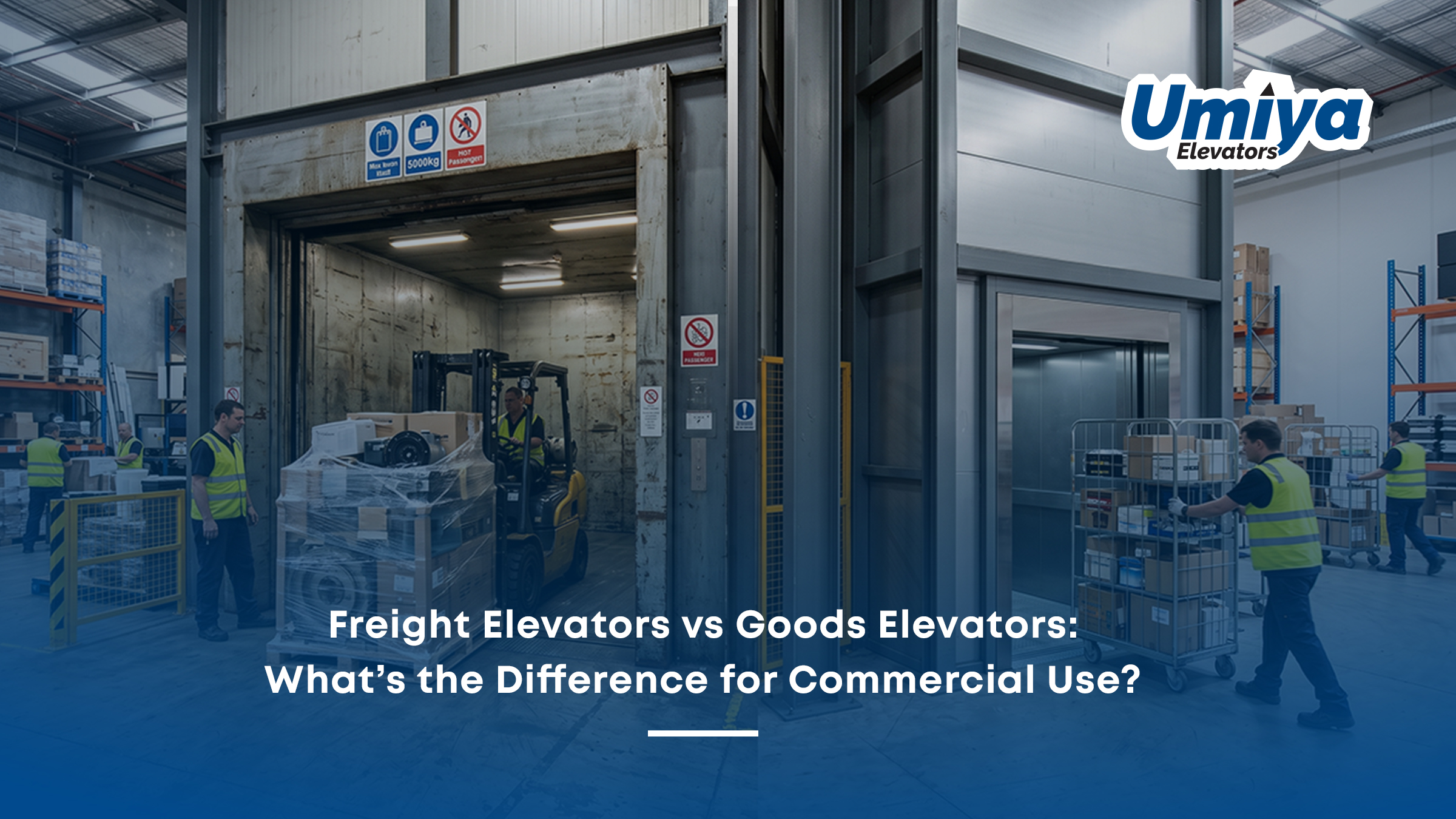
Businesses planning vertical transportation systems often come across two commonly used terms, freight elevators and goods elevators. While they may seem similar, both are designed for slightly different operational needs.
Understanding the difference helps warehouses, factories, retail spaces, and commercial buildings choose the right system for long-term efficiency and safety.
What are freight elevators?
Freight elevators are heavy-duty lift systems designed to transport large and bulky materials between floors. These elevators are commonly used in industrial and commercial environments where load handling is a priority.
They are typically found in:
- Warehouses
- Manufacturing units
- Distribution centers
- Industrial facilities
Freight elevators are built with strong structural components to support continuous heavy-duty operations.
What are goods elevators?
Goods elevators are designed for transporting materials and inventory within commercial and industrial spaces. While similar to freight elevators, they are often used for lighter or medium-duty applications.
Common usage areas include:
- Retail stockrooms
- Small warehouses
- Commercial storage spaces
- Shopping complexes
Many businesses opt for goods elevators when operational requirements do not involve extremely heavy machinery or oversized loads.
What is the main difference between freight elevators and goods elevators?
The primary difference lies in load handling and operational scale.
Freight elevators:
- Designed for heavy industrial loads
- Suitable for large equipment and machinery
- Built for rugged industrial environments
Goods elevators:
- Used for lighter or medium-duty material movement
- Suitable for commercial inventory and supplies
- Common in retail and smaller industrial setups
Choosing between the two depends on the type of materials being transported and the intensity of daily operations.
Which businesses should use freight elevators?
Freight elevators are ideal for industries that regularly move heavy loads.
Common examples include:
- Manufacturing factories
- Industrial production units
- Automobile workshops
- Large logistics facilities
Businesses handling pallets, machinery, or bulk materials generally require freight elevators for safe and efficient movement.
Which businesses benefit more from goods elevators?
Goods elevators are suitable for businesses with moderate material handling requirements.
Typical examples include:
- Retail showrooms
- Shopping malls
- Warehouses with packaged inventory
- Commercial stock areas
In many commercial buildings, goods elevators are installed alongside passenger lifts to separate customer movement from operational activity.
How do freight elevators improve industrial operations?
Freight elevators help industrial businesses by:
- Reducing manual material handling
- Improving workflow between floors
- Supporting heavy-duty operations
- Increasing workplace safety
For factories and warehouses in Gujarat, these systems are essential for maintaining operational efficiency.
Are installation requirements different for freight elevators?
Yes, freight elevators generally require:
- Larger shaft space
- Stronger structural support
- Higher load-bearing design
Commercial elevator installation planning becomes especially important for industrial projects where heavy-duty systems are involved.
Businesses usually consult experienced providers during the planning stage to ensure proper installation based on operational requirements.
What safety features are included in freight and goods elevators?
Both systems include important safety features such as:
- Overload protection
- Emergency stop systems
- Secure locking mechanisms
- Stable loading platforms
Since freight elevators handle heavier loads, additional reinforcement and industrial-grade safety systems are commonly included.
How much maintenance do these elevators require?
Regular maintenance is important for both systems, especially in high-usage environments.
Typical servicing includes:
- Mechanical inspections
- Load performance testing
- Safety checks
- Lubrication and component servicing
Many businesses work with a commercial lift supplier Ahmedabad industries rely on for both installation and ongoing maintenance support.
Which option is better for commercial buildings?
The right choice depends entirely on business operations.
Choose goods elevators if:
- Material movement is moderate
- Inventory handling is lighter
- Space efficiency is important
Choose freight elevators if:
- Heavy machinery or bulk goods are involved
- Operations run continuously
- Industrial-grade performance is required
A proper commercial elevator installation assessment helps businesses determine the most suitable solution.
Conclusion
While freight elevators and goods elevators serve a similar purpose, they are designed for different levels of operational demand. Freight elevators are better suited for heavy industrial usage, while goods elevators work efficiently for commercial inventory and moderate material handling.
For businesses in Gujarat, selecting the right system depends on load requirements, operational scale, and building structure. Working with an experienced commercial lift supplier Ahmedabad businesses trust can help ensure the elevator is properly matched to long-term business needs.
Choosing the correct elevator system ultimately improves workflow, safety, and overall operational efficiency.